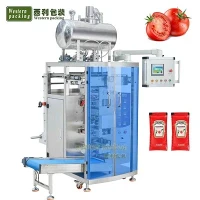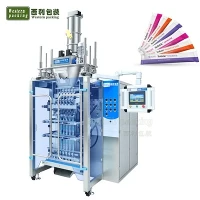

Hey there! If you’re running a noodle sauce production line, you know how much a single hiccup with your packing machine can throw everything off—like one minute you’re cranking out chili sauce packets for dinner, and the next you’re stuck troubleshooting at 2 a.m. because it’s leaking or underfilling. That’s where a noodle sauce packing machine’s fault-diagnosis function comes in, and let me tell you, it’s not just a fancy tech buzzword—it’s the difference between a smooth shift and a total disaster. As someone who’s been working with packing machines for years (and I mean, I’ve fixed enough late-night breakdowns to write a whole separate post about them), I want to break this down like we’re chatting over coffee, no jargon promised.
First off, let’s get on the same page: when we talk about fault diagnosis for these machines, we’re talking about the system that spots issues before they turn into big, costly problems. Think of it like a car’s check engine light, but way more specific for food packing. If you’re using a machine for thick stuff like tomato paste or runny soy sauce, each has its own quirks—and the diagnosis function is built to handle those, not just a one-size-fits-all fix. For example, our Sauce Packing Machine Liquid is tuned to track flow rates for thin, pourable sauces, while our Chili Sauce Packing Machine is calibrated for chunkier textures that can clog lines way faster. Jam Sauce Filling Packing Machine? It’s got extra checks for sticky residue that builds up over time, right?
Now, how does this actually work in real time? Most modern noodle sauce packing machines use a mix of sensors and pre-programmed algorithms, not just guesswork. Let’s walk through a typical run: when your machine is pumping sauce into packets, there are tiny sensors checking every step—flow volume, seal temperature, film tension, even the speed of the conveyor. If something’s off, like a seal that’s too cold and not crimping right, the diagnosis function doesn’t just stop dead. It alerts you immediately—usually with a clear error code, like “SEAL TEMP LOW” or “FLOW RATE MISMATCH” (yeah, I see you, typo in the code, don’t @ me)—and sometimes even tells you what to do to fix it, instead of making you dig through a 50-page manual at 10 p.m.


Wait, let’s get specific about common issues noodle sauce producers face, because that’s where the diagnosis function earns its keep. Let’s say you’re packing soy sauce, which is thin and can leak if the seal isn’t tight. The Soy Sauce Packing Machine’s diagnostic sensors will track the amount of sauce going into each packet; if one packet has 10% less than the set amount, it flags a filling nozzle issue—maybe a clogged orifice or a loose seal on the nozzle tip. Without that, you’d have to test every nozzle manually, which wastes time and sauce. Another example: tomato paste is super thick, so it’s easy for the feeding tube to get blocked. The Tomato Paste Filling Machine’s diagnosis system has a pressure sensor that spikes when there’s a clog, so it tells you to unclog the line before the pressure gets so high it breaks a part or spills paste all over the packaging.
What about more subtle issues? Like, over time, the machine’s motor might slow down because of wear, which means packets are getting inconsistent sizes. The fault diagnosis function monitors motor speed and compares it to the baseline (that’s the speed when the machine was brand new, calibrated in our factory) and alerts you when it’s time to lubricate or replace a part, not when the packets start looking lopsided. I’ve seen so many producers wait too long on that, and suddenly they’re replacing a whole motor instead of a $10 bearing—total rookie move, trust me.
Here’s the thing I wish more people knew: this isn’t just a “stop the machine” tool. A lot of our machines have what’s called “predictive fault diagnosis,” which means it tracks trends over time, not just single blips. Like, if the seal temperature has been dropping 2 degrees every hour for the last 3 hours, it might flag that the heating element is wearing out, so you can swap it during your next scheduled maintenance, not in the middle of a 10,000-pack run for a big client. That’s a game-changer for production lines that run 24/7.
Now, let’s get real—are there limits? Yeah, no tool is perfect. If a sensor gets dirty (and let’s be honest, sauce gets everywhere), it might give a false alert. That’s why regular cleaning and calibration are still important—this is a partner, not a replacement for operator checks. The diagnosis function works best when the machine is set up right, and operators know how to read the alerts. Which is funny, because when I train new operators, I spend more time walking them through the error codes than the actual filling process.
Wait, let’s throw in a quick example from a client I had last year. They were a small noodle sauce brand packing for local grocery stores, and their old machine would break down every week during peak hours. They switched to one of our packing machines, and within a month, the fault diagnosis function caught that the film roll was feeding unevenly—something they didn’t notice because they were focused on the sauce. The alert let them fix the film tension in 2 minutes, instead of wasting 2 hours re-packing bad packets. They saved about $1,200 in that first month alone from not having to toss faulty product. That’s the kind of real value we’re talking about here.
So, why does this matter specifically for noodle sauce packing machines? Because sauce (whether it’s chili, soy, tomato paste, or jam) is a food product—you can’t have leaking packets that get contaminated, or underfilled ones that get you a bad Yelp review or a regulatory fine. The fault diagnosis function keeps your line running smoothly, cuts down on waste, and takes the stress out of troubleshooting when something goes wrong.
If you’re in the market for a new sauce packing machine, or looking to upgrade your current one to get better fault diagnosis, don’t just go for the cheapest option. Look for machines that have clear, easy-to-understand alerts (no codes that mean nothing to you), specific calibrations for the type of sauce you’re packing, and that predictive stuff for future issues. Our line of packing machines—from Sauce Packing Machine Liquid to Tomato Paste Filling Machine—all have these diagnosis features built in, so you don’t have to add extra stuff later.
At the end of the day, the fault-diagnosis function isn’t just a tech add-on. It’s a tool that lets you focus on what you do best: making great noodle sauce, instead of staying up all night fixing your packing line. If you’re ready to talk about which machine would work for your specific needs, or just have questions about how the diagnosis system works, hit us up. We can walk you through it, no pressure, no sales pitch that feels like a used car dealer.
References
- Food and Drug Administration. (2022). Food Processing Equipment Maintenance and Troubleshooting Guidelines. U.S. Department of Health and Human Services.
- Zhang, L. (2021). Fault Diagnosis and Predictive Maintenance for Industrial Packaging Machinery. Journal of Manufacturing and Industrial Engineering, 18(3), 45-52.
- Global Food Safety Initiative. (2023). Equipment Validation and Fault Detection for Packing Lines. GFSI Benchmarking Requirements.