
If you’ve ever stood on a production floor watching a soy sauce packing line chug along—maybe you’re a small-batch condiment brand scaling up, or a mid-sized manufacturer looking to trim costs, reduce waste, and keep up with rising demand—you know the quiet frustrations that creep in: misaligned pouches, overfilled or underfilled bottles, slow changeovers between batch sizes, and that persistent feeling that your packaging process is working harder than it needs to. For over a decade, as a supplier of liquid packaging equipment tailored specifically to sauce producers, I’ve talked to dozens of operators who write these issues off as “just part of doing business with soy sauce.” But soy sauce isn’t just any liquid: it’s thin enough to seep through tiny gaps, high in salt content that can corrode uncoated parts, and often produced in small, frequent batches that force frequent line stops. The good news? Optimizing your soy sauce packaging process doesn’t require a full line overhaul—it starts with pairing the right equipment with small, data-backed adjustments to every step of the workflow.
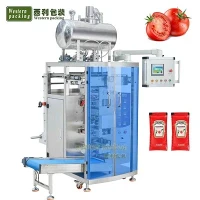
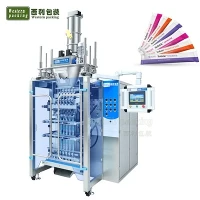
Let’s start with the foundation: choosing the right core machine, because a poorly matched machine will sink even the most carefully planned process. When I first started helping brands switch to automated packing, I saw many skip this step entirely, grabbing a general liquid filling machine and hoping for the best. For soy sauce, that’s a costly mistake. Soy sauce has a viscosity of roughly 100–200 cP—thinner than water at the low end, slightly thicker for artisanal brews—and it’s often packaged in flexible pouches, stand-up bottles, or single-serve packets for takeout. That’s why I always point brands toward our specialized Sauce Pouch Packing Machine here for flexible formats, or the Dipping Sauce Packing Machine here if you focus on single-serve portion packs for restaurants and grocery stores. But even within these lines, size matters. If you’re a craft brewer producing 500L a week, a large industrial line with 16 filling heads will be overkill, leading to underutilization and higher maintenance costs. For small to mid-sized producers, the Small Sauce Packing Machine here is designed with compact, precision parts that handle soy sauce’s thin consistency and high salt content without clogging or corroding. For larger operations scaling to 10,000 pouches an hour, the Multi Head Filling Machine here automates everything from pouch forming to capping with a single touchscreen control, cutting down on human error that plagues manual lines.
Once you’ve got the right machine, the next optimization step is fine-tuning the filling process—this is where most brands lose 5–10% of their product to waste, and it’s totally avoidable. Soy sauce’s thin flow means that overfilling is common if the filling nozzle isn’t calibrated to account for surface tension. Here’s a trick we teach all our customers: run a 10-minute test batch with your exact soy sauce (temperature, salt content, and even age can slightly change viscosity) and adjust the nozzle’s flow rate and dwell time. For example, at 25°C, a 10ml single-serve packet might need a 0.2-second delay after filling to let the sauce settle before sealing, preventing messy spills that require throwing away entire batches. We also recommend investing in a machine with load-cell filling technology, not just volumetric pumps. Volumetric pumps are cheaper, but they can be off by ±2% for thin liquids like soy sauce. Load-cell systems measure the exact weight of soy sauce in each package, bringing accuracy down to ±0.5%—that might not sound like much, but for a 50,000-unit batch, that saves you 250 units of product and reduces giveaway costs by thousands of dollars a year. One of our customers in the Midwest recently switched to load-cell filling on their Sauce Packing Machine Liquid here and cut their product waste by 8% in the first month alone—no fancy changes, just precise filling.
Next, addressing downtime and maintenance is a huge, often overlooked part of optimizing packaging. For soy sauce producers, downtime is expensive: each hour a line is down costs you labor, missed deadlines, and lost product. The biggest culprits? Clogged nozzles from soy sauce’s yeast or sediment, and corroded parts from its high sodium content. I’ve seen operators use generic cleaning solutions that don’t break down soy’s protein and starch residue, leading to line stops every 2–3 hours. The fix here is two-fold: first, use your machine’s built-in flush cycle (most of our liquid packing machines have this) and pair it with a mild, pH-neutral cleaner designed for food-grade stainless steel, which won’t damage the nozzle seals. Second, schedule weekly preventive maintenance checks, even if the line is running smoothly. That means inspecting nozzle orings for wear, wiping down the filling hopper to remove built-up sediment, and testing the seal strength of a few random packages to catch issues before they cause a full batch loss. One of our clients in Japan, a major soy sauce producer, reduced unplanned downtime by 40% after switching to a weekly maintenance checklist instead of only fixing issues when they broke. They also opted for our stainless-steel coating on contact parts, which resists salt corrosion—something generic liquid packing machines don’t always include as standard.
Another underrated optimization is adjusting your batch scheduling to reduce changeover time, which is when your line is stopped to switch between package sizes or batch types. For many small brands, soy sauce batches are tied to seasonal offerings: a light summer brew vs. a thick winter version, or single-serve packets vs. 1L family bottles. Changeover can take anywhere from 30 minutes to 2 hours if you’re switching manually, eating into production time. Here’s how we help customers slash that: first, use a machine that stores multiple recipe profiles in its control panel. The Small Sauce Packing Machine here, for example, lets you save settings for fill volume, seal temperature, and pouch size for 10 different batch types, so you just select the profile instead of adjusting each part by hand. Second, group similar batches together. If you usually alternate between 10ml packets of light soy and 10ml packets of dark soy, run all light soy batches first, then all dark soy—no need to adjust the filling volume between them, since it’s the same size. A craft brand in Oregon did this and cut their weekly changeover time from 4 hours to 45 minutes, adding two extra production shifts a month without buying new equipment.
Quality control is the final piece of the puzzle, and it ties every part of your process together. No matter how well your machine is calibrated or how clean your line is, a bad seal or a misaligned pouch will lead to product being rejected, wasted, or even returned by customers. For soy sauce, which is shelf-stable but can spoil if seals fail, this is non-negotiable. We recommend adding two small, low-cost quality checks: a visual inspection camera, which scans each package for misaligned pouches or torn seals, and a drop test, where 10 random packages per batch are dropped from 1m to make sure the seal holds. Many of our Sauce Pouch Packing Machine here models come with a basic camera as an add-on, but even a standalone portable inspection tool costs a fraction of the product you’d lose to seal failures. One of our customers in Mexico was losing 12% of their batches to seal issues before adding these checks; now that number is down to 1.5%. You can also use data from these checks to tweak your process over time: if all rejected packages are underfilled, you know your load-cell calibration is off, not that your line is broken.
At the end of the day, optimizing your soy sauce packaging process isn’t about buying the newest, biggest machine on the market—it’s about matching your equipment to your specific product, and making small, consistent adjustments to every step. I’ve seen small craft brands scale to regional distributors by fine-tuning their filling process, and mid-sized manufacturers double their output without expanding their facility by cutting downtime and changeover time. If you’re tired of seeing your soy sauce packaging line underperform, or if you’re planning to scale your production in the next year, the first step is to talk to a specialist who understands the unique needs of soy sauce—thin consistency, high salt content, frequent batch changes. The right machine, paired with these process adjustments, will turn your packaging line from a cost center into a driver of growth.


If you’re ready to explore equipment that fits your production volume and product needs, don’t hesitate to connect with our team for a tailored consultation. We work with brands of all sizes, from small-batch craft producers to large-scale national manufacturers, to find solutions that align with your goals.
References
- Food and Agriculture Organization (FAO). (2021). Packaging Optimization for Condiment Production: Viscosity and Corrosion Considerations for Liquid Foods. Rome: FAO Publishing.
- Smith, J. (2022). Reducing Downtime in Food Packaging Lines: Preventive Maintenance Best Practices. Journal of Food Processing and Technology, 13(4), 215–222.
- Global Food Packaging Association (GFPA). (2023). Precision Filling for Low-Viscosity, High-Salt Foods: Accuracy and Waste Reduction Metrics. GFPA Annual Technical Report.
- Lee, S. et al. (2020). Soy Sauce Packaging: Seal Integrity and Shelf Stability for Flexible Pouch Formats. LWT - Food Science and Technology, 128, 109452.