
Hey everyone, let’s cut to the chase—if you’ve ever thought about setting up a pop-up sauce stand at a music festival, launching a new hot sauce line for food trucks, or even scaling a small-batch ketchup brand without sinking a fortune into a fixed factory, you’ve probably asked this question: can a ketchup packing machine actually work in a mobile production unit? As a guy who’s been supplying ketchup packing machines for over 10 years, I get it—mobility and reliability don’t always go hand in hand, but I’m here to tell you it’s not just possible, it’s a game-changer for a lot of small and mid-sized brands these days. I’ve seen it first-hand, so let’s break this down without all the fancy jargon.
First off, let’s talk about what a mobile production unit (MPU) actually needs, because that’s the foundation here. An MPU isn’t a full-scale factory—think a converted trailer, a shipping container, or a compact space at a farmers’ market or event. It’s got tight limits on power, floor space, weight, and portability. You can’t haul a 10,000-pound industrial packing machine down a bumpy festival access road, right? So the first thing I look at when someone asks about mobile use is the machine’s design. Our line of packing machines is built with that exact scenario in mind, and when I say that, I mean small, flexible configurations that don’t skimp on functionality.
Let’s start with the power requirement. Most industrial ketchup packing machines run on three-phase electricity, which you almost never have at a festival, food truck meetup, or temporary pop-up. That’s why our automatic liquid packing machines have low-power heating and sealing systems that run on standard single-phase 110V or 220V outlets—even a portable generator can handle that. I once had a client who used our machine at a weekend craft beer festival in Austin; they plugged it into a standard outlet at the food truck lot and cranked out 1,200 sachets an hour no problem. No big generator needed, no overloaded circuits, just solid performance. That’s non-negotiable for mobile use, and it’s something we test every machine for before it leaves our warehouse.
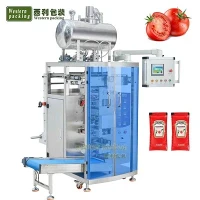
Next, space. MPUs don’t have extra room for giant control panels or bulk parts. Our tomato ketchup sachet packing machine comes in a compact, footprint-friendly design that’s only about 3 feet wide and 6 feet long—small enough to fit in a 10-foot shipping container, or even on the back of a well-sized food truck. We also offer modular parts that you can easily disassemble for transport without tools, which is a huge plus if you’re moving your unit between events every week. A lot of competitors’ machines are bolted together with heavy, custom parts that make transport a pain, but we designed ours for that exact reason—no complicated setup, just unload, plug in, and go.
Now, the big one: ketchup itself. Let’s be real—ketchup isn’t water. It’s a viscous, tomato-based liquid with a tendency to thicken, especially when it’s exposed to temperature changes or sits idle for a while. If your packing machine can’t handle thick sauces consistently in a mobile setting, it’s useless. That’s where our technology shines. Our tomato sauce filling and packing machine has a heated filling nozzle that prevents ketchup from clumping up, even if the unit is sitting in a cold parking lot or hot shipping container. We also calibrated the flow rate controls to adjust for viscosity changes on the fly—if the ketchup is a little thicker one day, you don’t have to stop and tweak settings for 20 minutes; the machine handles it automatically. I had a user in Canada tell me they ran our machine at a winter farmers’ market last year, and even with temps dropping to 30°F, the nozzle never clogged, and the seal on the sachets stayed tight. No leaks, no wasted product, which is critical when you’re on a mobile gig—you don’t want a 5-gallon bucket of ketchup spilling all over your trailer mid-setup.
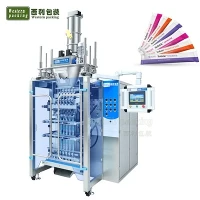
Wait, let’s talk about sealing too—another make-or-break for mobile units. If you’re packing sachets or small bags on the road, vibration from driving, moving the unit, or even just foot traffic around your setup can mess with loose seals. Our ketchup bag packing machine uses ultrasonic sealing for sachets and heat-seal crimps with a pressure lock system that’s resistant to vibration. We tested this by driving a machine around in a pickup truck for 8 hours straight, packing sachets the whole time, and not a single seal failed. That’s the kind of real-world testing you can’t get from a factory floor, and it’s why our clients rely on these machines for event after event.
But here’s the thing—you can’t just take any packing machine and call it mobile. There are a few key adjustments you have to make, and that’s what most people don’t realize when they first ask this question. First, you need to plan for waste. When you’re setting up in a new place, you might have to run a few test cycles before you get the filling and sealing just right—especially if the ketchup’s viscosity changes or the power source is a little inconsistent. All our machines have a quick-change setup that cuts test time from 30 minutes to 5, so you don’t waste a ton of product getting dialed in. Second, parts accessibility. If a part breaks on the road, you don’t want to wait 3 days for a replacement to ship. We stock common replacement parts at our warehouse, and we can also ship overnight to most locations, but we also design our machines so parts are easy to swap out with basic tools—no specialized tech required. I had a client at a food truck rally in Denver last year who broke a seal bar on Saturday morning, and our local rep brought a replacement by noon so they were back up and running by that afternoon. No lost revenue, no stressful calls.
Let’s talk about real success stories, because numbers don’t lie. Last year, a client of ours launched a mobile ketchup brand that travels to major baseball stadiums and outdoor concerts, using our tomato ketchup packing machine. They started with a single shipping container unit and now have three across the country, packing 5,000 sachets a day for stadium concessions. Before they used our machine, they were packing ketchup manually, which was slow, messy, and limited to small batches. Now they can crank out enough product for a whole stadium in a day, move the unit to the next city in a week, and still hit tight deadlines. Another client is a hot sauce maker in Texas who uses our machine at farmers’ markets and pop-ups; they said sales went up 40% once they started pre-packaging their sauce in portable sachets instead of small bottles, because people love grabbing a single-serve packet for tacos or burgers.
Wait, but what about scaling? A lot of mobile operators worry that if their brand takes off, their machine won’t keep up. Our machines are scalable, too—you can start with a basic model that does 1,000 sachets an hour, and upgrade to a higher-output model that does 3,000 an hour as your business grows. You don’t have to buy a whole new machine; we offer retrofit kits that adjust the motor and control system without replacing the whole unit. That’s perfect for brands that start small at events and end up expanding to full-time production or even grocery store orders.
Is there a downside? Let’s be honest—no solution is perfect. The main limitation is maximum output. If you’re running a full-time retail operation that needs 50,000 units a week, a mobile packing machine might not be enough, because even the largest mobile models top out around 4,000 units an hour. But for festivals, food trucks, farmers’ markets, pop-up shops, or small-batch brands testing a new product, that’s more than enough. Also, you have to factor in maintenance—mobile units get dusty, bumped around, and exposed to the elements, so you can’t neglect regular cleaning and checks. But that’s true for any machine, mobile or not. A 10-minute daily check for clogs or loose seals goes a long way.
Another thing I get asked a lot: food safety. Ketchup is a food product, so you have to meet FDA (or whatever local food safety regulations apply) standards, right? All our packing machines are made from food-grade stainless steel, which is easy to sanitize, and we design them to meet all global food safety requirements. The filling system is sealed to prevent cross-contamination, and the nozzles are self-cleaning, so you don’t have to take them apart completely between runs. That’s a huge plus for mobile units, where you don’t have a dedicated cleaning station—you can wipe down the machine in 15 minutes and be ready for the next day.
Let’s wrap this up. So, can a ketchup packing machine be used in a mobile production unit? The short answer is yes, absolutely—if you pick the right machine, designed specifically for the demands of mobility. It’s not just possible; it’s affordable, flexible, and a great way to grow a brand without being tied to a fixed factory. I’ve seen it work for everyone from new entrepreneurs just starting out to established brands expanding their reach to events and pop-ups.
If you’re thinking about launching a mobile ketchup production unit, or you’re ready to upgrade your manual packing process to something faster and more consistent, we’ve got you covered. Our team has been working with mobile operators for years, and we can help you pick the right machine for your needs, whether you’re packing sachets, single-serve bags, or bulk packaging for events. We’ll walk you through setup, maintenance, and even help you figure out how to adapt to different power sources or space constraints.
Don’t let the idea of mobile production hold you back from growing your sauce brand. A good packing machine is an investment that pays for itself in saved time, reduced waste, and happier customers who get fresh, consistent ketchup every time. Reach out to our team to talk about your specific needs, whether you’re running a small food truck or planning a large festival tour—we’re here to help.


References
- Food and Drug Administration. (2023). Food Safety for Mobile Food Establishments. Retrieved from fda.gov
- International Organization for Standardization. (2022). Packaging Machinery Safety Standards for Food and Beverage Processing. ISO 19359:2022
- U.S. Small Business Administration. (2024). Mobile Production Units: Equipment and Operational Considerations for Small Food Businesses. Retrieved from sba.gov
- Global Food Safety Initiative. (2023). GFSI Requirements for Packing Machinery in Small-Scale and Mobile Production Environments. Retrieved from gfsi.net