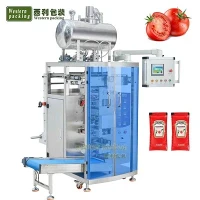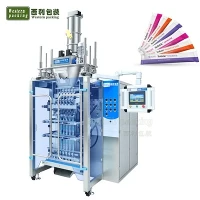

If you’re in the sachet packing game, you know that the interface of your machine isn’t just a pretty panel—it’s the thing that keeps your line running smooth, cuts down on downtime, and makes switching between products feel like a breeze. I’ve been supplying sachet packing machines for years now, and one of the most common questions I get from small business owners and production managers alike is: “Why does the interface on my machine look so different from the one at a fellow shop?” The truth is, it all comes down to what you’re packing, how much you’re producing, and the features you actually need. Today, I’m breaking down the key differences in these interfaces, no fancy jargon, just real-world stuff I see every day.
Let’s start with the basics: not all sachets are created equal. If you’re packing coffee powder in stick packs, your interface is going to look way different from someone packing jelly sachets for kids or essence for cosmetics. Take the Coffee Powder Stick Pack Machine, for example. Coffee powder is prone to clumping, and stick packs need precise fill weights to avoid leaking or being too light. The interface here is all about quick, accurate adjustments for powder density. Most entry-level models have a touchscreen that’s split into two main tabs: “Production Run” and “Parameter Setup.” The “Production Run” tab shows live numbers—current fill weight, how many sachets you’ve made, and a timer for when to switch out coffee rolls. The “Parameter Setup” tab has sliders for adjusting feeder speed, vibrator intensity (to keep powder flowing evenly), and seal pressure. What I like most about this interface is that you can save up to 10 different coffee blends, so if you switch between dark roast and medium grind, you don’t have to tweak every setting manually. It’s built for speed because coffee brands often run multiple small batches to test new flavors.
Now, if you’re in cosmetics, like packing essence or lotion, the game changes entirely. Let’s talk about the Essence Cosmetic Packing Machine. Cosmetic sachets are often for samples, so they’re smaller, and you have to be super careful not to spill or cross-contaminate formulas. The interface here is way more user-friendly for operators who might not be tech experts. It has big, clear icons instead of tiny text—like a drop of essence for fill settings, a seal for seal calibration, and a cleaning icon for when you need to switch between scents or formulas. Unlike the coffee machine’s sliders, this one has presets for different viscosity levels. Essence is thin, so the fill speed is fast, but lotion is thicker, so you need a slower, more controlled pump. The interface even has a built-in error alert that says something like “Low viscosity detected—adjust fill pressure” instead of a random error code, which saves so much time troubleshooting. I’ve seen small cosmetic brands go from struggling with a clunky machine to running 500 samples an hour with this interface because it’s intuitive. The Cosmetic Lotion Pouch Packaging Machine takes this a step further—since lotion can be thicker, the interface adds a “pulse pump” setting that lets operators adjust how often the pump activates, preventing bubbles that would ruin the sachet.
Next up, powder sachets that aren’t coffee—think protein powder, baby formula, or spices. The Powder Sachet Packing Machine has an interface that’s a middle ground between the coffee machine and the cosmetic ones. It’s a bit more robust than the cosmetic setup because powder can be messy, so the screen is touch-resistant (no wiping smudges off every 10 minutes) and has a “clean mode” that locks certain settings when you’re deep cleaning. What stands out here is the “trend monitoring” feature. Operators can pull up a graph on the screen that shows fill weight over the last 100 sachets, so if the powder is starting to clump and weights are off, they can catch it before a whole batch is ruined. The interface also has a “batch log” that automatically saves every run, so if there’s a problem with a particular batch of powder, you can go back and see what settings were used. This is a big deal for food brands, because they need to track production for safety and compliance—something the coffee machine’s simpler interface doesn’t prioritize as much.
Then there’s the Jelly Packing Machine, which is a whole different ballgame. Jelly is a semi-solid, often with fruit pieces, so the fill mechanism is a pump with a cutter, and the sachets usually have a unique shape (like square or heart-shaped) instead of the standard rectangle. The interface here is all about shape-specific settings. It has a “pouch design” tab where you can upload a drawing of your jelly sachet, and the machine adjusts the cutters, sealers, and fill position to match. Unlike the powder or cosmetic machines, the jelly interface has a “fruit inclusion” slider—if you’re adding real fruit bits, you can adjust the pump speed so the pieces don’t get crushed or stuck. I’ve had clients who make organic jelly snacks love this because they can switch between plain and berry-filled sachets in under two minutes, no manual calibration needed. One thing to note: this interface is more complex, so it’s better for mid to high-volume producers who run consistent jelly lines, not small batch operators.
Wait, but it’s not just about what’s inside the sachet—you also have to consider the production scale. Entry-level machines for small startups (like a local jam brand making mini jelly sachets for cafes) often have a smaller 7-inch touchscreen with fewer presets and basic alerts. Mid-range machines, like the ones we supply for small to medium cosmetic brands, have 10-inch screens with more detailed trend monitoring and custom alerts. High-volume machines for big coffee brands or snack companies have 15-inch screens, physical shortcut buttons for the most used functions (like start/stop and emergency stop), and even remote access—so if there’s an error, I can pull up the screen from my office and help the operator fix it without driving out. That’s a game-changer for companies with lines running 24/7.
Another thing I see a lot of people overlook is how the interface is tested for their specific team. If you have operators who are used to old, mechanical machines with dials and buttons, a fancy touchscreen might feel overwhelming at first. That’s why some of our machines have a “beginner mode” that hides advanced settings until the operator passes a quick calibration test. For example, when I set up a cosmetic packing machine for a brand that had never used an automated line before, we switched it to beginner mode, so all they saw was “Start,” “Stop,” and “Adjust Fill Amount.” Once they got comfortable, we unlocked the viscosity settings. On the flip side, if you have a team of tech-savvy operators who run multiple lines, they’ll want access to all the advanced settings, so we can enable “expert mode” with sliders, graphs, and custom presets.
Downtime is the biggest killer for production, and the interface is a huge factor in that. A few months back, a client reached out saying their coffee stick pack machine was throwing random error codes, and they were losing $2,000 an hour in downtime. When I logged into the remote access (a feature only on high-end coffee interfaces), I saw the error was a clogged feeder, but the machine’s interface didn’t say that—it just said “Feeder Error.” They hadn’t noticed the tiny “Check Feeder” note hidden in the settings. Compare that to the cosmetic machine’s interface, which flashes a big, colored alert—red for critical, yellow for warning—so even a new operator knows what to fix immediately. For the jelly packing machine, if the fruit pieces are stuck in the pump, it doesn’t just error out—it shows a 10-second video clip on the screen of how to unclog it, which cuts troubleshooting time from 20 minutes to 2.
Let’s talk about common mistakes people make when choosing a machine based on its interface. A lot of small cosmetic brands see the coffee machine’s big touchscreen and think it’s the best, but they don’t realize they don’t need all those sliders for lotion or essence. The coffee machine’s interface is overkill, and the complex buttons make it hard to learn. On the other side, a big snack company packing powder might buy a basic cosmetic machine, and it can’t handle the trend monitoring or the wipe-resistant screen they need for 12-hour runs. It’s all about matching the interface to your product, your team, and your production volume.
If you’re still figuring out which sachet packing machine is right for you, the interface is a great starting point. Don’t just look at the price tag—think about how often you’ll switch products, how technical your team is, and what kind of products you’re packing. Whether you’re making coffee sticks, cosmetic samples, protein powder packets, or jelly snacks, there’s an interface built to make your job easier.
Ready to find the perfect machine for your needs? If you want to dive deeper into any of the options I mentioned, you can check out the links I’ve added to this post to see the exact interfaces and features for each machine. Our team has helped hundreds of brands pick machines that fit their operations, so we’re here to help you too. Reach out to us to walk through your production needs, ask more about the different interfaces, and get a custom quote—we’ll make sure you get a machine that works for your team, not against them.


References
- Industrial Packaging Association. (2022). "Human-Machine Interfaces for Packaging Equipment: Key Considerations for Efficiency." Journal of Packaging Technology and Science, 35(4), 217-231.
- Food and Drug Administration. (2021). "Automated Packaging Equipment Guidance for Small Business Operators." U.S. FDA Center for Food Safety and Applied Nutrition.
- Cosmetic, Toiletry, and Fragrance Association. (2023). "Packaging Equipment Best Practices for Sample Size Production." CTFA Industry Guidelines.
- International Coffee Organization. (2022). "Coffee Packaging Equipment: Interface Design for Specialty Coffee Producers." ICO Technical Brief, No. 17.
- Powder and Bulk Solids Engineering Association. (2023). "Interfaces for Powder Filling Machines: Reducing Cross-Contamination and Downtime." PBSEA Conference Proceedings.