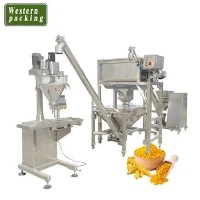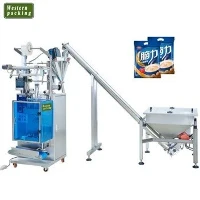

If you’ve ever walked down the grocery aisle or checked a product label, you’ve likely seen small, functional ingredients blended into fine powders—think instant coffee with creamers, protein powders with added vitamins, or chemical cleaning powders with surfactants. As a powder packing machine supplier, I get this question all the time: Can our equipment actually handle powders mixed with additives? The short answer is yes, but it’s not a one-size-fits-all solution. Success depends on understanding how additives interact with base powders, how equipment is calibrated, and choosing the right tools to avoid common pitfalls like segregation, inaccurate dosing, or contamination. Let’s break this down with real-world context, from the manufacturing floor to the end product.
First, it’s critical to define what “powders with additives” means here. Additives aren’t just random ingredients—they can be flow aids, flavorings, vitamins, preservatives, or even performance-enhancing chemicals. For example, a plant-based protein powder might have base pea protein, plus small amounts of sunflower lecithin (a flow aid to prevent clumping) and vanilla powder (a flavor additive). A chemical detergent powder could include sodium carbonate (base) with added enzymes (performance additives) and optical brighteners. Each of these additives has unique physical properties: some are fine, dust-like, others are granular, some are hygroscopic (absorb moisture), others are abrasive. These properties directly impact how they move through packing equipment, which is why generic packing machines often struggle with mixed powder blends.
Let’s start with the biggest challenge: powder segregation. When you have a blend of particles of different sizes, shapes, or densities, they tend to separate during handling—tiny additives like lecithin powder or vitamin micro-particles might get pulled away from the larger base powder particles as the mix is transferred from a mixing hopper to a packing machine. This leads to inconsistent dosing: one sachet might have way more vanilla, another almost none, which is a huge quality control issue for brands. I see this mistake all too often in small operations that use old, basic packing machines without proper blending and feeding systems. That’s why a reliable powder packing machine needs to integrate with robust mixing technology first. For example, our line works seamlessly with a Chemical Powder Mixing Machine that’s designed for gentle, uniform blending of fine additives without segregating the mix mid-process. This machine uses low-shear agitation and controlled discharge to keep base powders and additives evenly distributed, so the blend stays consistent from mixing all the way to the final package.
Next, feeding accuracy. Additives are often used in small percentages—sometimes less than 1% of the total powder weight—so a packing machine that can’t dose tiny, precise amounts will waste product or fail regulatory limits. Basic auger fillers, which are common on old manual or semi-automatic packing machines, can struggle here because they rely on the density and flow of the entire powder blend. If the additive is less dense than the base powder, the auger might push more base powder and less additive through, or vice versa. The solution? Automatic dosing systems that use multiple feeding mechanisms tailored to each component of the blend. For example, a 1% vitamin additive might use a micro-dosing auger, while the larger base powder uses a main auger, both calibrated to precise weights before entering the packing line. This level of precision is why upgrading to a modern Powder Automatic Packing Machine is non-negotiable for brands packing additive-rich powders. These machines have smart servo-driven feeders that adjust in real time if the blend’s flow changes, ensuring every package meets label specifications.
Then there’s the question of package format, which varies depending on the powder’s end use. Powders with additives might be packed in small stick sachets for individual serving sizes (like instant coffee or protein supplements), in multi-lane strips for high-volume consumer goods, or even in small sachets for niche products like snus. Each format requires a packing machine adapted to the blend’s properties. For example, a stick sachet that holds 1 to 5 grams of flavored coffee mix needs a packing machine that can handle both the fine coffee powder and the granular creamer additive without leaking or spilling. Our Stick Sachet Packet Cartoning Machine is built for this: it uses gentle, closed feeding systems that prevent dust escape (critical for additives that might be sensitive to air) and has quick-change parts to switch between blends without cross-contamination. For even higher throughput, brands packing additive-rich powder for consumer snacks or personal care might opt for a Multi Lane Powder Stick Packing Machine, which runs multiple sachet lines at once while maintaining dosing accuracy for each individual lane—even with trace additives.
We also can’t ignore specialty powders, like full-automatic snus sachets that often have added flavorants and moisture-adjusting additives that need to stay consistent in every pouch. These blends have unique stability requirements: if the packing machine doesn’t control humidity and temperature in the feeding zone, the additives might clump, ruining the entire batch. Our Full Automatic Snus Sachet Packaging Machine is equipped with a controlled-environment hopper that maintains low humidity, which is essential for additives that absorb moisture—so the snus powder stays smooth and pourable, even after hours of production. This level of customization isn’t available on generic packing machines, which is why working with a supplier that understands the nuances of additive-rich powders makes all the difference.
I’ve seen brands make two common mistakes when testing packing machines for additive blends. First, they use a generic machine designed only for bulk powder, not small or sensitive additives. Last year, a small protein brand came to us after using a second-hand packing machine that couldn’t dose their vitamin B12 additive—each sachet had anywhere from 50% to 150% of the labeled amount, leading to hundreds of returned products and regulatory fines. We integrated our micro-dosing auger system with their existing mixing machine, and adjusted the packing machine’s hopper to reduce segregation, bringing their dosing accuracy within 0.5% of the target. The second mistake is not testing the actual blend, not just a sample of base powder. Too often, brands bring us base powder and say “just test this,” but additives change everything. We always request a full sample of the blend, including all additives, to run test cycles on our machines—we measure segregation, dosing accuracy, and package integrity before we even suggest a line. That hands-on testing is what separates a good packing machine from one that works for your specific powder.


Another key consideration is cross-contamination. Many brands pack multiple products with different additives—for example, a detergent line that has both scented and unscented powders. If a packing machine isn’t easy to clean, scented additive residue could end up in unscented batches, ruining products and leading to brand damage. Modern Powder Automatic Packing Machines are built with quick-release, food-grade (or chemical-grade, depending on the application) parts that can be disassembled and cleaned in minutes, not hours. This is especially important for additive-rich powders, where even a tiny amount of leftover flavor or chemical could ruin a new blend. We always emphasize to our customers that cleaning ease is non-negotiable when packing blends with variable additives.
So, to circle back to the original question: Yes, a powder packing machine can absolutely be used for powders with additives—but not just any machine. It needs to be paired with the right mixing technology to prevent segregation, have precision dosing systems for small additives, be adapted to your specific package format, and include features for easy cleaning and environmental control. As a supplier, our role isn’t just to sell equipment—it’s to help brands navigate the unique challenges of their powder blends. We work with customers to test their specific additive mixtures, adjust our machines to fit their production lines, and provide ongoing support to ensure every run is consistent.
If you’re packing a powder with additives and struggling with segregation, inaccurate dosing, or poor package quality, the first step is to evaluate your current equipment and blend handling process. A good packing machine should grow with you, too—many of our customers start with a small Stick Sachet Packet Cartoning Machine for test runs, then upgrade to a Multi Lane Powder Stick Packing Machine as demand grows. The key is choosing a machine that’s designed with additive-rich powders in mind, not just bulk, unblended base powder.
At the end of the day, the goal of packing additive-rich powders is to deliver a consistent, high-quality product to the end user. Whether you’re packing a vitamin supplement, flavored coffee, industrial chemical powder, or snus, the right packing machine will ensure every sachet, stick, or pouch has the exact balance of base powder and additives that you promise on the label. If you’re ready to explore solutions tailored to your powder blend, we’re here to help.
References
- Powder Technology Handbook, 3rd Edition, CRC Press, 2007, Chapter 12: Powder Segregation and Control
- Good Manufacturing Practices (GMP) for Pharmaceutical Powders and Blends, U.S. Food and Drug Administration, 2021
- "Handing and Packing of Fine Powders for Consumer Goods", Journal of Packaging Technology and Science, Vol. 32, No. 4, 2019, pp. 145-162
- "Moisture Control in Powder Packing Lines for Hygroscopic Additives", Powder Handling & Processing, Vol. 28, No. 2, 2016, pp. 89-97