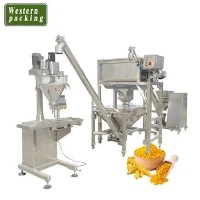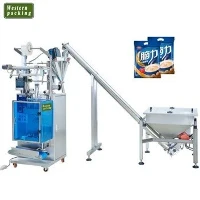

If you’re a shampoo brand owner that’s hit a wall with your current packing machine running too slow to keep up with orders, you’ve probably asked yourself: Can I just modify my existing equipment instead of dropping cash on a whole new line? As a shampoo packing machine supplier, I get this question all the time—mostly because small to mid-sized brands don’t want to sink thousands into replacement gear when their current machine isn’t totally dead. The short answer is yeah, most of the time you can boost production capacity with smart, targeted modifications—no need to start from scratch. But let’s get real: not every tweak works for every machine, and cutting corners here can lead to more headaches than it solves.
First, let’s set the scene. I’ve seen brands roll in with a beat-up old Automatic Shampoo Sachet Packing Machine that’s only cranking out 30 sachets per minute, when their demand’s at 50. Or a Vffs Machine that’s stalling every time it tries to fill thicker, new-formula shampoo they just launched. The core of capacity issues usually boils down to one or two things: your machine can’t move faster without messing up seals or filling accuracy, or it’s bottlenecked at one specific step (like filling, pouch forming, or output counting). Modifications target those exact bottlenecks, not the whole machine.
Let’s break down the most common, high-impact modifications we walk our customers through, because not all tweaks are created equal. The first and easiest one? Upgrading the filling system. A lot of basic shampoo packing machines use piston fillers that work fine for thin, standard shampoo, but if you’re running thicker formulas, they’re stuck on a slow cycle to avoid splatters or over-fills. We recently had a customer who switched from a manual piston filler on their old unit to a servo-driven volumetric filler—no part of the machine’s frame or base changed, just the filling mechanism. They jumped from 35 to 55 sachets per minute in a week, no downtime. That’s a game-changer, and it’s way cheaper than a whole new Shampoo Filling Packing Machine. Another filling hack: if you’re packing small sachets, adding a multi-head filler instead of a single head can split the load, so each head fills a pouch at the same time. We helped a brand do that on their existing line, and their capacity doubled overnight.
Next up, fixing the pouch forming and sealing step. This is where a lot of old machines get stuck—if your sealer’s working at a fixed temperature or pressure, speeding up the machine makes seals weak or uneven, which leads to leaks and wasted product. The fix here is usually upgrading to a temperature-controlled, servo-driven sealer that adjusts on the fly as the machine speeds up. We also recommend swapping out old film rollers for precision ones that don’t slip, which keeps the pouch forming consistent even at higher speeds. A customer of ours had a standard sealer on their Small Pouch Packing Machine that could only handle 40 pouches a minute; after a sealer upgrade, they hit 65, and leak rates dropped from 8% to less than 1%. That’s not just more capacity—it’s less product wasted, which is a win all around.
Wait, but what about the parts you don’t see? A lot of people forget that moving parts like belts, cutters, and sensors get worn down over time, and they’re usually the ones that cause stalls when you try to speed up. If your machine’s 5+ years old, it’s probably got generic belts that stretch under stress, or optical sensors that can’t keep up with faster line speeds. Swapping those out for heavy-duty, precision-machined parts makes a huge difference. We once had a customer who thought their whole machine was obsolete, until we swapped their old conveyor belt for a reinforced one and their cutter for a servo-driven unit that cuts faster and more accurately. They went from constant stalling at 30 units per minute to steady production at 50, all for a few hundred dollars in parts. That’s the kind of modification that surprises people because it’s small, not a full overhaul.
But hold on—there are limits here. I can’t stress this enough: modifying a machine only works if it’s in good shape to begin with. If your machine is 10+ years old, has rusted frames, or was built with low-quality, generic parts that can’t handle higher speeds, modifications won’t fix the root problem. We had a brand come to us last year that tried to do a quick hack on their 12-year-old machine, replacing the motor to speed it up, but the frame wasn’t rigid enough, so the whole thing vibrated at higher speeds, leading to terrible seals. They ended up having to buy a new machine anyway, so they wasted money on the motor upgrade for nothing. The rule of thumb here is: if your machine’s still running reliably at its current speed, modifications are worth it. If it’s already breaking down weekly, a new machine is probably the better call.
Another thing to consider: downtime and costs. Modifications shouldn’t take weeks of your production line being down, right? Most good modifications can be done in 1-2 days, and cost 30-50% less than buying a new machine. But you have to plan for it—don’t try to do a major modification right before a big order, because if something goes wrong, you’ll miss deadlines. We always tell customers to schedule modifications during a slow week, so if there’s a hiccup, you’re not in a pinch. Also, make sure the parts you’re using are compatible with your existing machine. For example, you can’t just slap a random servo filler on any old packing machine—you have to make sure it fits the frame, connects to your existing control system, and works with the type of shampoo you’re packing. That’s where working with a reputable supplier like us comes in—we don’t just sell parts, we help you figure out exactly what your machine needs.
Wait, what about more advanced modifications? If you’re really looking to push capacity, you can add features like automatic counting systems that sort finished pouches faster, or even a built-in checkweigher that rejects underfilled or overfilled pouches as the line speeds up. A lot of older machines don’t have these, and adding them not only boosts capacity by reducing manual sorting time, but also cuts down on waste. We had a customer who added an automatic counting unit to their machine, so they didn’t need two people standing by to count and pack finished pouches—they now have one person running the whole line, and output went up 20% because they eliminated that manual step. That’s a modification that’s easy to overlook, but it has a big impact on overall capacity.
Let’s talk about a few myths I hear all the time. First myth: you have to replace your whole machine to get more capacity. No—most capacity gains come from fixing specific bottlenecks, not replacing every part. Second myth: modifications will break your machine. If you work with a supplier who knows what they’re doing, and you only modify parts that can handle the speed increase, you won’t break anything. Third myth: modifications are only for small sachet machines. We’ve modified larger bottle filling machines too—same logic: identify the bottleneck (could be the capper, the filler, or the conveyor) and tweak that.
At the end of the day, the decision to modify or replace your shampoo packing machine comes down to three things: your current machine’s condition, your budget, and your short-term demand. If you need to boost capacity fast without big downtime, modifications are the way to go. If your machine is on its last legs, and you need to handle future growth down the line, a new machine might be better. But here’s the thing: I’ve seen too many brands jump into modifications without doing their homework, or settle for low-quality tweaks that end up costing more. That’s why we always start with a free assessment of your machine—we look at how it’s running now, where the bottlenecks are, and tell you exactly what modifications would work, what would be a waste of money, and what your capacity will jump to.
If you’re stuck with a machine that’s not keeping up, and you want to explore your options, reach out to our team to talk through your specific situation. We don’t push unnecessary modifications, and we don’t push new machines if a tweak will work just as well. At the end of the day, our goal is to help you get your shampoo out the door faster, without wasting your time or money.


References:
- Technical Manual for Automatic Shampoo Sachet Packing Machines, 2022 Edition, Packaging Machinery Industry Association
- Guide to Modifying VFFS Machines for Increased Production, Industrial Packaging Solutions Report, 2021
- Efficiency Analysis of Shampoo Filling and Sealing Systems, Journal of Packaging Engineering, Volume 18, Issue 3, 2020
- Small Pouch Packing Machine Modification Best Practices, Global Packaging Technology Review, 2023 Edition
- Servo-Driven Packaging Equipment: Performance and Capacity Improvements, Packaging Machinery Manufacturers Association, 2022