
Hey there, if you’re running or working in the chemical industry, you probably know that mixing powders isn’t just dumping a bunch of materials into a bin and calling it a day. It’s all about getting consistent, uniform blends—no lumps, no hot spots, no weird inconsistencies that mess up the final product. And that’s where powder mixing machines come in. As someone who’s been supplying these machines for a minute now, I’ve seen first-hand how they’re the unsung heroes of so many chemical processes. Let’s break down what they actually do in the chemical space, because trust me, it’s way more than just one job.
First off, let’s talk about the basics: chemical manufacturing relies on precise combinations of raw materials—think active ingredients, fillers, additives, pigments, you name it. If your mix is off, your end product can be garbage, and that’s not just a minor issue—it can be a safety or compliance problem. Take specialty chemical formulations, for example. A lot of these need very precise ratios of fine powders, and even a tiny inconsistency can ruin the whole batch. That’s where the right equipment comes in; I’ve had clients go from spotty manual mixing to reliable automated systems, and the difference is night and day. Whether you need a small-scale unit for R&D or a heavy hitter for full production, there’s a machine out there for every need.
One of the biggest applications I see is in the production of agrochemicals. Farmers around the world depend on fertilizers and pesticides that work exactly as intended, right? Those products are usually a mix of active compounds, carriers, and sometimes coating agents. If they’re not mixed evenly, you might end up with clumps that don’t spread properly, or areas with too much of a chemical that’s harmful. For this, a lot of our clients use something like the Powder Mixing Machine 100 Kg—perfect for mid-sized batches, compact enough to fit in most production spaces, and it gives that uniform blend agrochemicals need. The thing about agrochemicals is that they’re often produced in cycles, so having a machine that’s easy to switch between products without cross-contamination is a big plus, and these units are built exactly for that.
Next up is polymer compounding. Polymers are everywhere—from plastics used in packaging to parts for cars and electronics. When you make a polymer, you’re mixing the base resin with things like plasticizers, stabilizers, colorants, and fillers. The blend has to be super consistent because it affects how the final polymer performs: flexibility, durability, color, everything. Bad mixing here leads to inconsistent color (like a plastic part that’s streaky) or parts that break prematurely. I’ve worked with a few polymer firms that switched from old, worn-out blenders to Industrial Powder Blender units, and they told us their defect rates dropped by a huge margin. These industrial units handle larger volumes too, so when production ramps up, you don’t have to deal with multiple small batches that might not match. That efficiency is a game-changer for keeping up with demand.
Then there’s the area of specialty chemicals, which is a broad category—think everything from pharmaceuticals’ excipients to industrial additives for water treatment. Excipients are super important in pharma because they’re the inactive ingredients that help the active drug get delivered properly, and they need to be mixed perfectly so every pill has the right dose. Even if you’re not in pharma, industrial specialty chemicals need the same precision: things like water treatment coagulants, which are mixed to clean up industrial wastewater, or industrial lubricant additives that extend the life of machinery. For R&D teams testing new formulations, our Industrial Powder Mixing Equipment line has smaller, flexible models that let them test small batches without committing to a full production run. That’s key for innovators who need to iterate quickly.
Speaking of innovation, what about nanochemicals? Yeah, that’s a more cutting-edge area, but it’s growing fast. Nanoparticles are tiny, so mixing them evenly with other powders is tricky—they tend to clump up, which ruins their effectiveness. Modern powder mixing machines, especially the ones built for delicate materials, have features like gentle mixing paddles or controlled shear that break up those clumps without damaging the nanoparticles. I’ve had a couple of tech startups reach out for these because they’re developing nanocoatings and other advanced materials, and they can’t use manual mixing (which is inconsistent) or harsh mixers that destroy the particles. It’s cool to see these machines supporting new, forward-thinking chemical work.
Wait, I should also mention the importance of avoiding cross-contamination in chemical mixing. A lot of chemical facilities handle multiple products, so if residue from one batch gets into the next, that can mess up the new product and even be unsafe. The equipment we supply, like the Powder Mixer Machine 500Kg and Industrial Powder Blending Equipment, is designed with easy-to-clean features—no hard-to-reach corners, smooth surfaces, and parts that can be taken apart quickly. That means when a client switches from, say, a fertilizer batch to a pesticide batch, they don’t have to spend hours taking the machine apart, and there’s way less chance of leftover powder causing issues. It’s the little design choices like that that make a big difference for daily operations.

Another thing I’ve noticed is that many chemical manufacturers are moving toward more sustainable practices these days. Powder mixing machines help with that too, right? Because when you have a consistent blend, you don’t waste materials—you use exactly what you need, no overmixing or scrapping bad batches. Plus, some of our newer models are more energy-efficient, using less power per batch than older equipment. That’s a win for both the client’s bottom line and the planet, which is a big selling point now, more than ever. No one wants to run a production line that’s wasting resources, and these machines help cut down on that waste.
Let’s talk about real-world use cases to make this concrete. Last year, a client that makes custom industrial detergents reached out. They were using manual mixing for their powdered detergent blends, and they were getting a lot of complaints about inconsistent cleaning power—some batches worked great, others didn’t. We suggested testing a small unit, the Powder Mixing Machine 100 Kg, for their pilot runs. After a month, they switched to full production with an Industrial Powder Blender, and they told us their customer complaints dropped by 90% and their production time per batch was cut in half. That’s the kind of result that makes doing this worth it. Another client, a polymer manufacturer, had issues with color inconsistency in their plastic packaging. They upgraded to our Industrial Powder Blending Equipment, which has variable mixing speeds, so they could adjust for different colorants. Now their packaging is consistently colored, and they’ve saved thousands in scrap material.
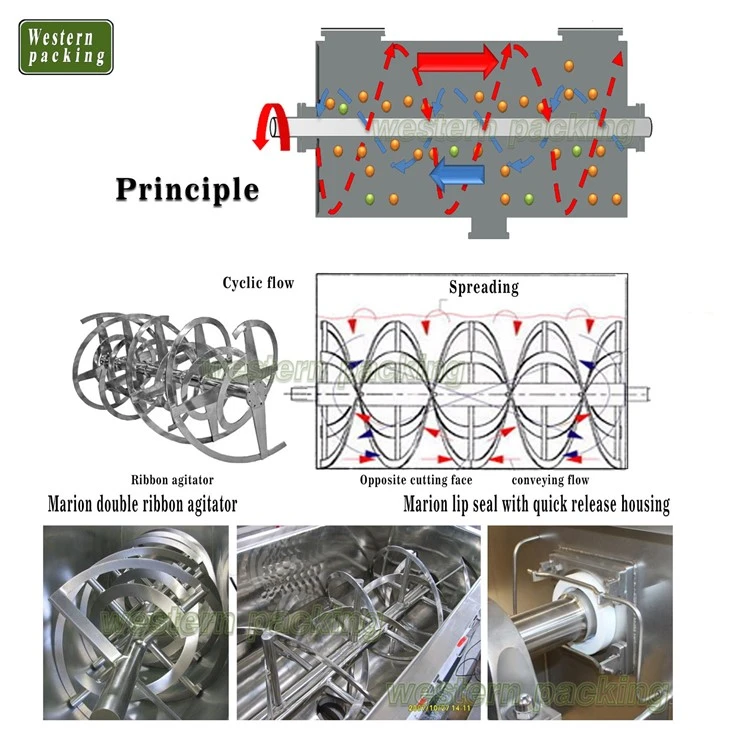
I should also address a common question I get: do you need a different machine for different powder types? The short answer is yeah, sometimes, but not always. Fine, light powders vs. coarse, heavy powders—they mix differently, so the machine’s design matters. For example, a ribbon blender works well for free-flowing powders, while a tumble blender is better for more delicate materials that could break if mixed too hard. That’s why we have a range of units, from small R&D models to large industrial ones, so clients can pick what fits their specific materials and needs. If you’re not sure, just reach out and we can help you figure out what works best for your chemical processes—no pressure, just straight talk.
Now, if you’re a chemical plant manager, process engineer, or R&D lead, and you’re tired of inconsistent mixes, high scrap rates, or production delays from outdated mixing equipment, I’d encourage you to check out what we have to offer. Whether you’re a small startup testing new formulas or a large facility ramping up full production, there’s a powder mixing machine that can fit your needs. We’ve got models for every batch size: 100 Kg for smaller runs, 500 Kg for mid-sized production, and heavy-duty industrial units for large-scale chemical manufacturing. We also offer support, from helping you pick the right machine to installation and after-sales service, because we’re not just selling equipment—we’re partnering with you to make your operations better.
If you’re ready to talk through your specific requirements, feel free to connect with us to discuss your project and find the right powder mixing solution for your chemical applications. We’re here to help.
References
- Smith, J. (2022). "Modern Powder Mixing Technologies for Industrial Chemical Processes." Journal of Chemical Engineering and Processing, 58(3), 112-127.
- Lee, S. et al. (2023). "Precision Mixing in Agrochemical Manufacturing: Challenges and Solutions." International Journal of Agrochemical Science, 17(2), 89-101.
- Patel, R. (2021). "Polymer Compounding: The Role of Uniform Powder Mixing in Product Performance." Polymer Engineering Journal, 41(4), 223-235.
- Zhang, L. & Wang, H. (2024). "Nanochemical Mixing: Gentle Processing for Delicate Particles in Advanced Materials." Nanotechnology and Materials Science, 9(1), 45-58.
- Global Industrial Powder Handling Market Report. (2023). Market Research Future, 1-150.