
If you’ve ever stood on a production floor watching powder products roll out of packaging lines nonstop, you’ve probably wondered: how fast does a good powder packing machine really run? As a supplier of industrial powder packaging equipment, I get this question at least once a week—usually from small business owners looking to scale up, or plant managers trying to fix a bottleneck that’s been slowing their lines down. The answer isn’t a single number. It’s a range, shaped by everything from the type of powder you’re handling to the packaging format you’re using. Let’s break this down, and share what we’ve learned working with hundreds of clients across food, pharma, and specialty powder industries over the last decade.
First, let’s start with the basics: packaging speed for a powder packing machine isn’t just about how many units it cranks out per minute. It’s also about accuracy and consistency—two non-negotiables that can’t be sacrificed for speed. A machine that runs 100 bags a minute but spills half its powder or underfills 1 out of 10 won’t save you money; it’ll cost you in waste, rework, and customer complaints. That’s why when we talk about speed ranges, we’re always anchoring them to real-world performance, not just theoretical test numbers from a lab.
The biggest factor that shapes your speed range is the type of machine itself. Not all powder packing machines are built the same, and each is designed for a specific task. Let’s walk through the most common setups we supply, and their typical speed ranges.
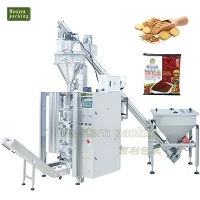
For small to medium runs of 1kg powder packs, for example, a vertical form-fill-seal (VFFS) 1Kg Packing Machine Powder Packing Machine is a workhorse for many food and spice brands. These machines are built to handle lightweight, free-flowing powders like cocoa, protein powder, or ground coffee. On the low end, you can expect around 15 to 20 packs per minute for delicate powders that tend to clump or get airborne—think matcha or specialty baking powder that requires gentler handling to avoid contamination. On the high end, that number jumps to 60 to 75 packs per minute for free-flowing, low-dust powders, with a 1kg fill accuracy of within 10 grams. That range isn’t random; it’s calibrated to prevent overstuffing, seal failures, and powder leakage, which are the most common issues with 1kg pack sizes, where even a small misalignment in the machine can throw off weight.
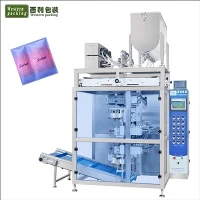
If your brand is making single-serve stick packs—think instant coffee, protein shots, or powdered supplements—the Muti Lane Powder Stickpack Filling Packaging Machine is a popular choice, and its speed range is even more impressive. Multi-lane machines run multiple stick packs side by side, so they’re designed for high-volume, single-serve production. For fine, free-flowing powders like instant coffee or vitamin C powder, you’ll see speeds between 100 and 140 sticks per minute across all lanes. For more delicate, slightly clumpy powders like meal replacement shakes, that drops to 70 to 100 sticks per minute to avoid jams in the filling system. What’s unique about these machines is that their speed range is scalable—add a lane, and you add production without a huge increase in floor space, which is why many startups and mid-sized brands lean on them to scale up without investing in a whole new line.
Another machine we see clients asking about a lot is the Dry Powder Stick Sachet Automatic Cartooning Machine, which automates the final step of packing stick sachets into cartons for retail. The speed here is tied to the stickpack machine it works with, but overall, the line’s speed ranges from 60 to 120 cartons per minute. The lower end is for cartons holding smaller runs of specialty powders, while the upper end is for high-volume retail packaging like individual sugar sachets or baby formula sticks. We’ve seen clients combine this machine with their existing stickpack lines to cut labor costs by 70% and double their output without adding extra shifts.
When it comes to food-grade powders specifically, the Food Powder Filling Machine has a speed range that’s tailored to meet regulatory standards for hygiene, which adds a small layer of complexity. Food powders often require washdown-friendly parts and air-tight seals, so the speed can’t be as high as industrial non-food powders. For free-flowing food powders like flour, sugar, or baking soda, speeds range from 20 to 50 bags per minute for smaller formats, and up to 80 bags per minute for larger 5kg or 10kg bulk bags. For more viscous food powders like hot chocolate mix or gravy powder, that drops to 15 to 40 bags per minute, as the machine needs extra time to avoid clumping during filling. Regulatory bodies like the FDA and EU’s EFSA also require that these machines maintain a 99% fill accuracy rate, so even at the upper end of the speed range, we test every unit before delivery to make sure it doesn’t skip a fill or leave powder on the machine’s exterior.


Specialty powders, like spice powder, have their own unique speed parameters, which is why the Spice Powder Packing Machine is built with adjustments for low-dust handling. Spices are often fine, dusty, and prone to sticking to machine parts, which can slow down production if not addressed. For fine spices like cinnamon or paprika, the speed ranges from 10 to 35 packs per minute for small 50g to 100g retail packs. For coarser spices like chili flakes or mixed seasonings, that goes up to 40 to 60 packs per minute, as the larger particles are less likely to jam the filling auger. We’ve had spice brands come to us with old machines that ran at 12 packs a minute, only to upgrade to a new spice packing machine that hits 45 packs a minute, cutting their production time in half while reducing powder waste by 12%.
Of course, speed ranges aren’t one-size-fits-all. There are a handful of variables that can shift a machine’s performance, and we always make a point to walk clients through these when they’re choosing a machine for their line. First, powder characteristics: if your powder is high-dust, clumpy, or electrostatic, you’ll need a slower speed to prevent jams, spills, and contamination. We once had a client working with pharmaceutical-grade antibiotic powder that had to run at just 18 packs a minute, because any faster would create dust that risked cross-contamination between batches. Second, packaging size: smaller packs (10g or 20g) always run faster than larger packs (5kg or 10kg), because the filling system doesn’t have to move as much product. Third, line integration: if the packing machine is connected to a conveyor, a metal detector, or a checkweigher, that can cap your overall line speed, even if the packing machine itself could run faster.
Another thing to note is that newer technologies have pushed these speed ranges up in the last five years. Auger filling systems, which are the most common for powder packing, used to top out around 50 packs per minute for 1kg formats. Now, with servo-driven augers and smart sensors that adjust fill speed in real time, many of our 1kg machines can hit up to 80 packs a minute without sacrificing accuracy. That’s a game-changer for brands that were hitting a ceiling on their production for years.
I’ve seen too many sales pitches that throw out a single “max speed” number to sell a machine, but that’s misleading. For example, a machine advertised as 100 packs per minute might only hit that speed if you’re packing free-flowing 50g sugar sachets. If you try to run that same machine with clumpy 1kg spice packs, it’ll slow down to 30 packs per minute, which is a huge gap. That’s why we always work with clients to test their actual powder and packaging on our demo machines before they make a purchase. We send out sample test runs of their product, so they can see exactly what speed they can expect, and adjust the machine’s settings to match their needs.
When we talk to small business owners who are just starting out, they often ask if they should opt for the fastest machine available to “grow into it.” But that’s a mistake. A machine that runs at 80 packs a minute might require more maintenance and use more energy than a machine that runs at 50 packs a minute, even if it has extra capacity you’re not using. For many startups, a machine at the lower end of the speed range is more than enough for their first year of production, and they can upgrade to a higher-speed machine as demand grows. We’ve had clients that started with a 20-pack-per-minute spice packing machine, and two years later, moved up to a 50-pack-per-minute multi-lane machine when they landed a national retail contract. That flexibility is a big part of why our machines are designed to scale, not just for speed.
If you’re in the market for a powder packing machine, the first step is to figure out your non-negotiables: what powder you’re handling, what pack sizes you need, and what your production target is. From there, you can narrow down the speed range that works for you. Whether you’re packing 1kg protein powder, single-serve stick packs for coffee, or bulk spice sachets, there’s a machine tailored to your needs, with a speed range that balances speed, accuracy, and cost.
If you’re ready to explore what works for your specific powder and production goals, we’re here to help. We don’t just sell machines—we work with you to understand your line, test your product, and find the right balance of speed and reliability for your brand. Get in touch to discuss your requirements and find the perfect powder packing solution for you.
References
- Powder Packaging Equipment Industry Report, 2024. Global Packaging Machinery Association.
- Food and Drug Administration (FDA) Guidelines for Hygienic Packaging Machinery, 2023.
- Multi-Lane Packaging Machine Performance Analysis, International Journal of Packaging Technology, 2022.
- Small to Medium Business Packaging Efficiency Study, Small Business Administration, 2023.