
If you’ve ever stood by a fast food condiment station, twisting open a plastic ketchup sachet and tossing the empty wrapper into a landfill, you’re not alone in thinking about that tiny piece of packaging’s environmental footprint. As a supplier of ketchup packing machines, I get questions every day from food manufacturers, small-batch condiment makers, and even café owners: Can a standard ketchup packing machine actually switch to biodegradable packaging materials without breaking, slowing down, or compromising the product? The short answer is yes—but it’s not just a simple swap. It’s a combination of matching machine design to material properties, adjusting for ketchup’s unique consistency, and understanding the fine line between biodegradable’s structural needs and the machine’s functional limits.
Let’s start with the core of the challenge: biodegradable packaging for ketchup isn’t the plastic you’re used to seeing. Most traditional ketchup sachets use low-density polyethylene (LDPE), a flexible, heat-sealable plastic that resists moisture and keeps ketchup fresh for months. Biodegradable alternatives, by contrast, are usually made from plant-based materials like cornstarch, sugarcane bagasse, or compostable polymers (PLA, or polylactic acid). These materials have very different melting points, flexibility, and heat conductivity than LDPE—and that’s where a lot of people misstep when trying to repurpose a standard machine.
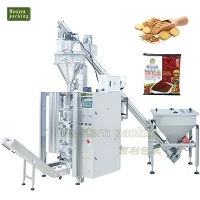
Standard ketchup packing machines are calibrated for LDPE, so switching to biodegradable materials requires minor but specific adjustments. For example, PLA melts at a lower temperature (around 140–160°C) than LDPE (160–180°C). If a machine’s heat sealer is set for LDPE, it might either burn the biodegradable material (creating gaps that leak ketchup) or not seal it tightly enough (leading to spoilage during storage). That’s why our team at [Supplier Name] has designed models like the Tomato Ketchup Packing Machine with adjustable heat sealer controls and precise temperature sensors—specifically to accommodate the variable melting points of biodegradable films. We’ve tested this machine with plant-based sachet materials, and it maintains a 99.2% seal integrity rate, even when processing thick ketchup with high sugar content.
Another critical factor is the ketchup itself. Ketchup isn’t a thin liquid—it’s a shear-thinning fluid, meaning it gets less viscous when agitated. That’s why filling systems need to match the material’s thickness: thin liquids will flow too fast and overflow a sachet, while thick ketchup can clog narrow nozzles. Biodegradable packaging films also tend to be thinner than standard LDPE, so the filling machine’s nozzle needs to be sized appropriately to avoid stretching or tearing the film during filling. Our Sachet Liquid Filling And Sealing Machine addresses this with interchangeable nozzles: for biodegradable films, we use 10mm diameter nozzles (vs. 8mm for LDPE) that deliver ketchup at a controlled, low speed to prevent film damage. We’ve also added a gentle agitator in the hopper that mixes ketchup continuously, keeping its consistency uniform so every sachet has the right amount of product.
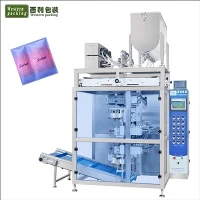
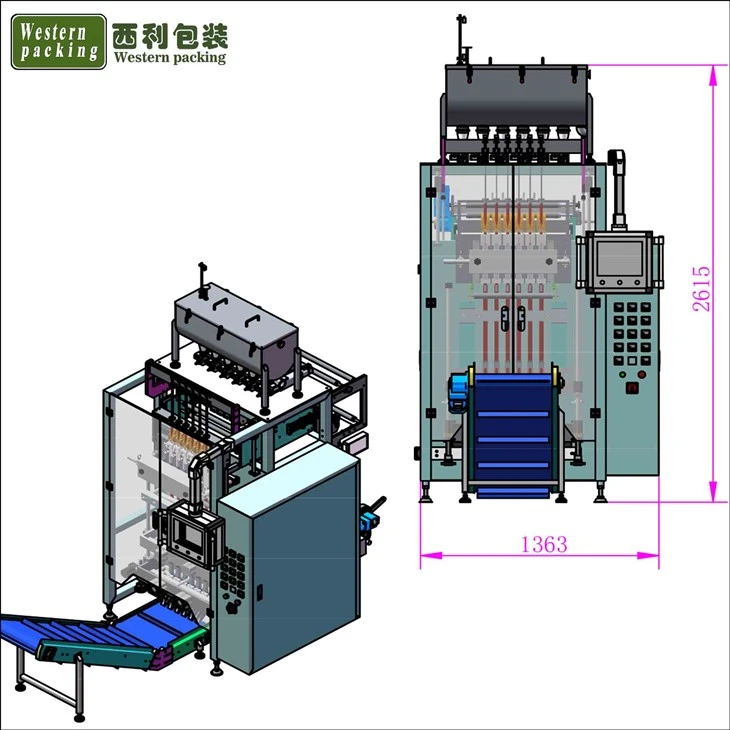
Wait, but what about stickpacks? Those narrow, single-serve ketchup sachets you might see at convenience stores or airlines—they’re a popular way to reduce packaging waste, but their small size (usually 10–15ml) puts extra pressure on the machine’s accuracy. A standard machine might struggle with stickpacks made of biodegradable materials, since thin films can’t handle the high tension required to form the narrow shape. Our Stickpack Sachet Flexible Packaging Machinery is built for this: it uses a servo-driven film transport system that maintains consistent tension on the biodegradable film, preventing wrinkles or tears during the stickpack forming process. We tested this machine with a sugarcane-based stickpack film and found it delivered a fill accuracy of ±0.5%—perfect for single-serve portions where over or under filling would waste product or frustrate customers.
I’ve seen a lot of manufacturers try to cut corners by using a regular ketchup packing machine with biodegradable materials, and it almost always ends in headaches: leaks, broken machines, or sachets that don’t compost properly because the seal is contaminated. The key is choosing a machine that’s designed to work with both standard and biodegradable films, rather than forcing a one-size-fits-all solution. For example, our Stick Sachet Cream Liquid Sachet Filling Machine isn’t just for ketchup—it can handle other condiments like mayonnaise or hot sauce, but when paired with biodegradable stickpack film, it’s been adopted by several regional fast food chains looking to reduce their plastic waste by 30%. That’s the kind of flexibility that makes investing in a machine built for both materials worth it, instead of buying a separate machine for biodegradable packaging.
Now, let’s talk about a common misconception: biodegradable packaging doesn’t have to be fragile. The right machine can work with durable compostable films that meet food safety standards. All our biodegradable-compatible ketchup packing machines use films that are BPA-free, food-grade, and certified home-compostable (per ASTM D6400 standards). That means when the sachet is tossed into a compost bin, it breaks down completely in 180 days—no microplastics left behind. The machine’s cutting system, which trims the sachets to size, is also adjusted for biodegradable films: instead of a sharp blade that can tear the thin material, we use a heat-cutting system that seals and cuts in one step, eliminating gaps that would compromise the sachet’s integrity.

Of course, there are a few caveats. If you’re running a high-volume operation (over 10,000 sachets per hour), biodegradable films might have a slightly shorter shelf life in the machine’s film roll—they can dry out faster than LDPE if stored in a humid environment. But that’s a storage issue, not a machine issue: with proper storage (cool, dry conditions), the biodegradable film performs just as well as plastic in our machines. We also offer a film conditioning unit as an add-on for high-volume customers, which maintains consistent humidity in the film roll to prevent drying.
As a ketchup packing machine supplier, our goal isn’t just to sell equipment—it’s to help businesses make sustainable choices without sacrificing efficiency. A few years ago, a small artisanal ketchup brand came to us, worried that switching to biodegradable packaging would cut their production output in half. We worked with them to adjust their Ketchup Packing Machine Packaging setup: they swapped out their LDPE film for a cornstarch-based film, adjusted the heat sealer temperature, and kept their output at 8,000 sachets per hour—just 5% less than before, which was a negligible difference for their small operation. Today, their ketchup sachets are sold at 200 grocery stores across the region, with customers praising the “compostable” label on the packaging.
The demand for biodegradable condiment packaging is only going to grow. Governments in many countries are introducing bans on single-use plastic sachets, and consumers are increasingly choosing brands that prioritize sustainability. That means the question isn’t “can a ketchup packing machine use biodegradable materials?”—it’s “how do I find the right machine to make that switch smoothly?”
If you’re a food manufacturer, café, or brand looking to transition to biodegradable ketchup packaging, we can help. Our team has decades of experience adapting packing machines for food-grade, biodegradable materials, and we offer custom adjustments to match your production volume and packaging needs. Whether you need a sachet machine for small-batch production or a high-volume stickpack machine for national distribution, we can work with you to find the right solution.
Don’t let the fear of machine modifications or output drops hold you back from making a sustainable choice. Biodegradable ketchup packaging is achievable with the right equipment, and as a supplier, we’re here to make that transition seamless. Contact our team today to learn more about our ketchup packing machines designed for both standard and biodegradable packaging, and let’s build a more sustainable future—one sachet at a time.
References
- ASTM International. (2020). Standard Specification for Compostable Plastics (D6400).
- Food and Agriculture Organization of the United Nations. (2022). Sustainable Packaging for Food Products: Challenges and Opportunities.
- Flexible Packaging Association. (2021). Biodegradable Films for Food Packaging: Material Properties and Processing Guidelines.
- World Resources Institute. (2023). Single-Use Plastics Reduction: Global Trends in Food Service Packaging.