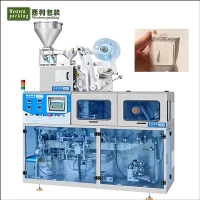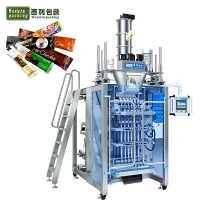

If you’ve ever grabbed a fast food combo and found a perfectly portioned, leak-free ketchup packet that squeezes out just the right amount of sauce—no mess, no empty sachets, no uneven seals—you’ve experienced the work of a well-designed ketchup packing machine. As a supplier of sauce packaging equipment, I’ve spent years helping food brands large and small optimize their production lines, and one question comes up again and again: how do these machines ensure every single ketchup packet meets strict quality standards? The answer lies in a layered, science-backed quality control (QC) mechanism that addresses every step of the packing process, from raw material input to final packaging.
Let’s start with the foundation: before the machine even touches ketchup, QC begins with material verification. The packaging film—usually a multi-layer laminate designed to resist acid, moisture, and punctures from sharp ketchup crystals—has to pass initial checks for thickness consistency, seal strength, and barrier properties. A film that’s too thin might tear during filling, while a film with uneven layers could lead to weak seals that fail mid-distribution. Our team works with clients to calibrate their film feed systems, ensuring tension is uniform across the entire roll; even a 5% variation in tension can cause misaligned seals or off-sized packets. For brands that want to diversify their sauce offerings, many of our customers also use this same line setup with a Peanut Butter Sachet Packaging Machine to maintain quality consistency across different liquid and semi-liquid products, which relies on the same material testing protocols we apply to ketchup packaging.
Next, the filling stage is where precision is non-negotiable. Ketchup’s viscosity—thicker than water, with a tendency to cling to equipment—makes it tricky to fill consistently. Over-filling leads to messy, bursting packets; under-filling leaves customers short-changed and brands vulnerable to complaints. Our ketchup packing machines use piston filling technology with digital controls that adjust in real time: sensors track the weight of ketchup dispensed per sachet, and if a variance exceeds 0.5 grams, the machine automatically stops the filling head and alerts the operator. This isn’t just a guess—we calibrate these systems using dynamic viscosity tests specific to tomato ketchup, since temperature changes (ketchup thickens when cold, thins when warm) can alter flow rates. For brands that offer stick sachets of creamy condiments alongside ketchup, a Stick Sachet Cream Liquid Sachet Filling Machine uses the same piston filling logic, with smaller nozzles tailored to the narrower stick sachet format, ensuring the same level of accuracy across both packaging styles.
Once the ketchup is filled, the sealing process is the most critical part of QC—this is what prevents leaks, the number one complaint about ketchup packets. Heat sealing works by applying controlled temperature, pressure, and dwell time to the edges of the sachet, melting the laminate layers together without damaging the inner barrier film. Too little heat and the seal is weak; too much heat and the film burns, creating pinholes. Our machines use infrared temperature sensors that scan each seal as it’s made, comparing the temperature to pre-programmed thresholds for ketchup packaging (typically 120–140°C for three-side seals). If a seal’s temperature is outside the range, the machine diverts that sachet to a rejection bin, so only properly sealed units move forward. We also perform regular burst strength tests: every hour, a sample sachet is punctured with a standardized tool to ensure the seal can withstand 10+ PSI of pressure, which is more than enough to survive shipping, handling, and being squeezed in a backpack or purse. For brands scaling up their sauce lines, investing in a reliable Sauce Packaging Machine with this integrated real-time seal testing is far more efficient than post-production manual checks, which slow down output and miss small defects.
Leak testing is another layer that’s often overlooked but essential. Even the tiniest pinhole from a hidden seal defect can lead to spoiled ketchup, especially during long shelf life. Our ketchup packing machines use two complementary leak detection systems: vacuum decay testing and dye penetration testing. Vacuum decay works by placing finished sachets in a vacuum chamber; if a sachet has a leak, air will escape, causing a drop in pressure that the machine’s sensors pick up within two seconds. Dye testing is used for high-volume lines: a mild, food-safe dye is sprayed over the sealed sachets, and if it seeps into any opening, the sachet is rejected. This dual system catches defects that either test might miss alone—for example, a micro-pinhole too small for vacuum testing to detect, but large enough to let dye in. For smaller brands that don’t need full automated leak testing, we offer manual leak test stations that use a simple squeeze method, but for large-scale operations, integrating these systems directly into the ketchup packet machine eliminates human error and speeds up quality checks.
Weight verification is the final gate before sachets are boxed for shipping. Even with precise piston filling, minor variations in ketchup density (from batch to batch of tomato paste) can lead to off-weight packets. A checkweigher placed after the filling and sealing station scans every sachet, weighing it to within +/- 1 gram of the target weight. Any sachet that falls outside the range is automatically removed, ensuring every packet meets the label’s stated net content. This is especially important for brands in regions with strict food labeling regulations, where under-filling can result in fines or recalls. Our Ketchup Packet Machine systems are designed to sync with checkweigher data, so operators can adjust piston settings on the fly if a batch of ketchup is slightly thicker or thinner, avoiding unnecessary rejected units.

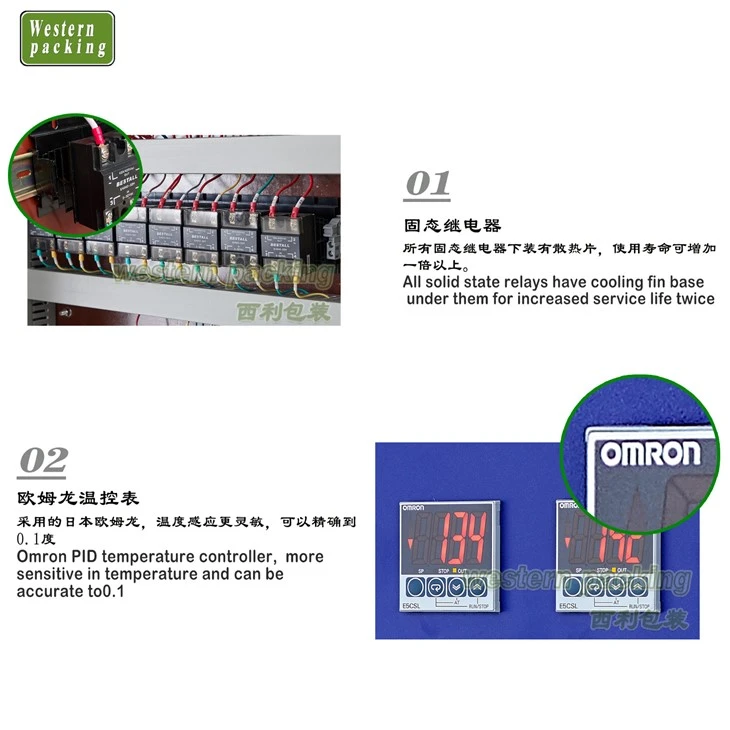
But QC doesn’t stop at the machine—regular maintenance and operator training are key to keeping these quality controls running smoothly. Even the best-designed machine will develop calibration issues over time if not serviced properly. We provide clients with a quarterly maintenance checklist that includes calibrating filling pistons, cleaning temperature sensors, and testing seal pressure, and we offer on-site training for operators on how to interpret QC data, adjust settings, and troubleshoot minor issues without halting production. For example, if a batch of ketchup has higher acid content than usual, operators can adjust the heat sealing temperature to compensate, since acid can slightly lower the melting point of the packaging film. This flexibility is why our clients choose our ketchup packing machines over one-size-fits-all models: the QC mechanisms are built to adapt to the unique properties of ketchup, rather than treating it as a generic liquid.
As a supplier, I’ve seen how investing in robust QC doesn’t just reduce defects—it builds customer trust. A brand that consistently delivers leak-free, properly portioned ketchup packets will have higher repeat sales and fewer returns, which is why every component of our ketchup packing system is engineered with quality at its core. Whether you’re a small local sauce brand looking to launch your first line of packets or a national chain scaling up production, our team can help you find the right machine with the QC features that match your needs. If you’re ready to discuss how our sauce packaging equipment can improve your production line’s quality and efficiency, feel free to reach out for a consultation.
References
- Food and Drug Administration (FDA). (2021). Food Packaging and Labeling: Safety Standards for Flexible Barrier Films. U.S. Department of Health and Human Services.
- European Food Safety Authority (EFSA). (2020). Viscosity Testing for Food Processing Equipment Calibration. EFSA Journal.
- International Organization for Standardization (ISO). (2019). ISO 11607: Packaging for Terminally Sterilized Medical Devices – Part 1: Requirements for Materials, Sterile Barrier Systems, and Packaging Systems.
- Pack Manufacturers Institute. (2022). Quality Control Protocols for Flexible Food Packaging Lines. PMI Technical Report Series.