

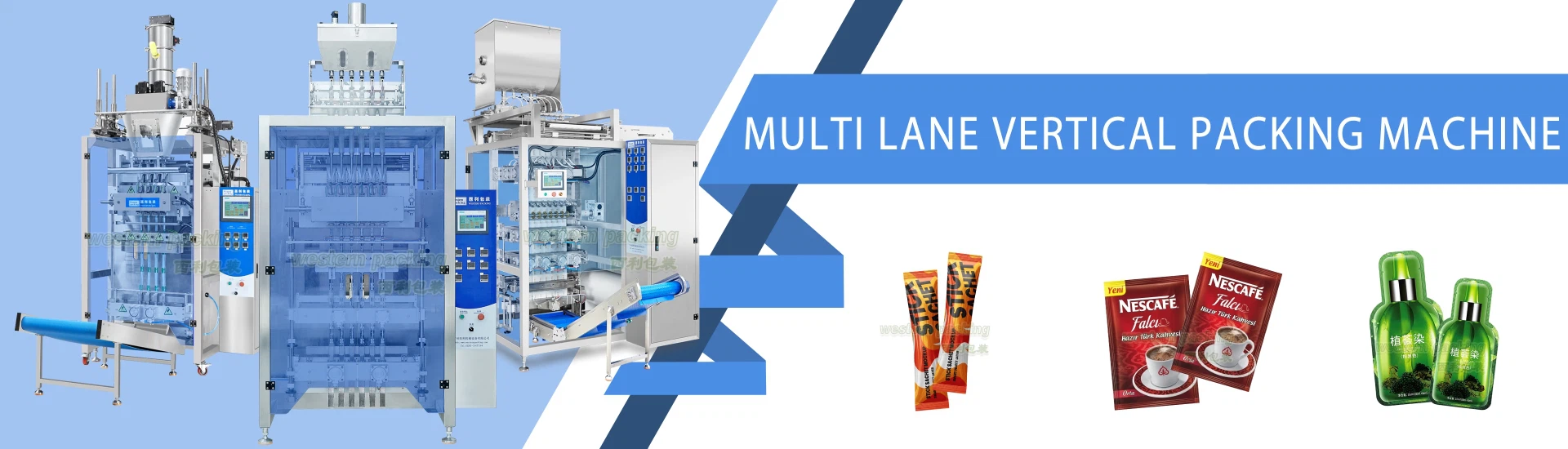
In automated powder packaging production lines, powder pouch packing machines and vacuum feeders have almost become a standard combination. Many companies wonder during the initial selection process: Why can't manual feeding be done? What problem does a vacuum feeder actually solve? In fact, this configuration not only relates to efficiency but also directly affects the production environment, metering accuracy, and overall cost control.
Ensure continuous material supply and improve production efficiency
Powder packaging machines are highly sensitive to the continuity of material feeding. Manual feeding is not only unpredictable but also prone to interruptions or insufficient supply, causing the packaging machine to stop and wait.
Vacuum feeders automatically pick up raw materials and transport them directly to the hopper or packaging machine's storage bin through pipelines. They can also be linked with level sensors to automatically replenish materials when needed. Even when the production line is running at high speed, a stable supply can be guaranteed, significantly improving equipment utilization and production efficiency.
Reduce dust pollution and improve the production environment
Powdered materials, especially lightweight materials like milk powder, starch, and chemical powders, are prone to dust generation during manual feeding and unloading. This dust not only affects the workshop environment but can also harm the health of operators.
Vacuum conveyors utilize closed-loop pipelines, allowing materials to move under negative pressure, preventing dust from scattering. Furthermore, a filtration system purifies the exhaust air, further reducing the impact of dust on the workshop. This is particularly important for industries with high cleanliness requirements, such as food and pharmaceuticals.


Ensure stable measurement and improve packaging accuracy
The metering accuracy of powder packaging machines is greatly affected by the stability of the material supply. Fluctuations in powder levels or uneven feeding in the hopper can lead to inconsistent weights in each package, resulting in overweight or underweight products.
Vacuum feeders, by continuously and uniformly conveying powder, prevent empty hoppers or fluctuating material levels. Combined with vibration or anti-bridging devices, they can improve material flowability. This not only improves packaging accuracy but also reduces raw material waste.
Reduce labor costs and labor intensity
Manual feeding requires frequent handling of raw material bags, which is labor-intensive and can lead to dust leaks or measurement errors if not handled properly.
Vacuum feeders automate material suction and conveying, replacing multiple operators with a single machine. Operators only need to periodically add raw material bags or check the equipment's operating status, reducing labor intensity and minimizing human error.
The powder pouch packing machines paired with vacuum feeders are not merely for improving efficiency or saving labor; they optimize the production process in multiple ways, including production efficiency, environmental control, metering accuracy, safety, and automation. A well-configured feeding system makes powder production more efficient, safe, and intelligent, a crucial measure for modern powder companies to enhance their competitiveness.


