

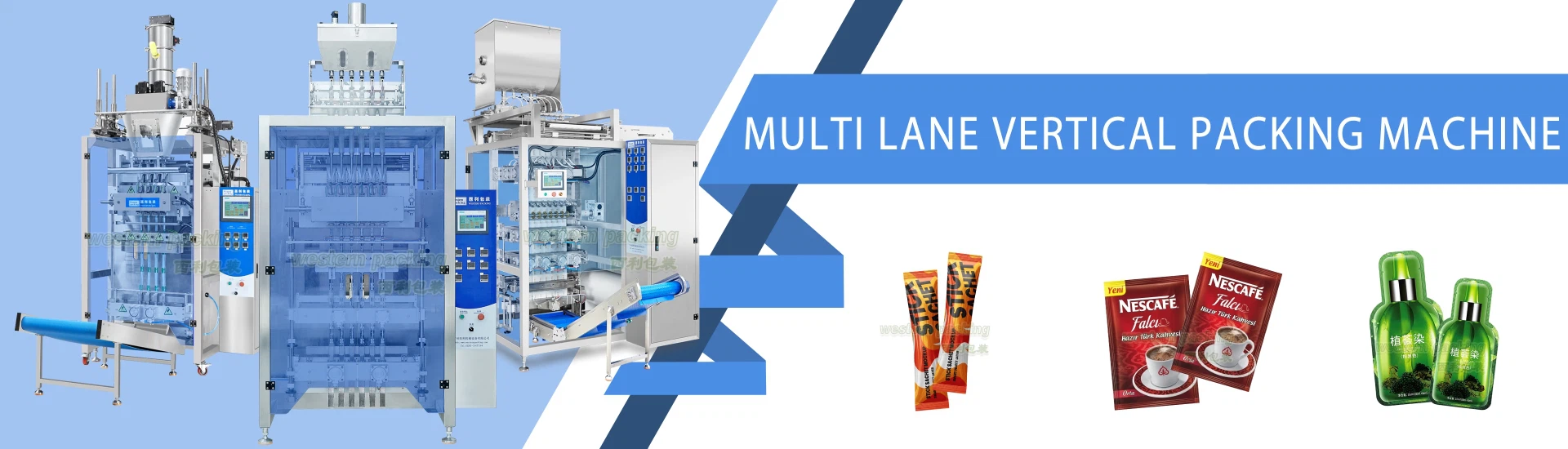
Multi-lane granule packing machines are widely used in the automated packaging of small bags in the food, daily chemical, agricultural, and pharmaceutical industries. Due to significant differences in materials and production capacity requirements, several key factors need to be considered when selecting a model to ensure long-term stable operation of the equipment.
Material properties
Material characteristics are the basis for selection, as different particles vary significantly in terms of flowability, uniformity, and moisture content. For example, materials with good flowability, such as sugar and salt, are suitable for high-speed measuring cups, while seeds or seasoning granules have higher requirements for feeding stability. If the material is prone to moisture or generates dust, it may also affect the measurement stability, so the material state must be determined first.
Measurement methods: Swing cup and push cup
The mainstream metering method for granule packing machines currently uses a measuring cup structure, including two types: swing cup and push cup.
The swing cup structure is simple in structure, runs fast, and has a lower cost, making it suitable for standard granules with good flowability. However, its accuracy is significantly affected by the material's state. The push cup structure offers more stable metering and better repeatability, making it suitable for applications with high consistency requirements or slightly more complex materials, but its cost is relatively higher.
When choosing between these two types, a trade-off is usually struck between "cost-effectiveness" and "accuracy and stability."


Packaging specifications and production capacity
The weight of different product packaging varies significantly, ranging from 1g to tens of grams. When selecting a model, it's necessary to confirm whether the measuring cup volume matches the target specifications and whether it supports rapid adjustment.
Meanwhile, the production capacity of multi-lane equipment depends on the number of rows (e.g., 4, 6, 8 rows, etc.), but increasing the number of rows increases the difficulty of synchronous control. Therefore, it's essential to choose a model that aligns with actual production capacity requirements.
Accuracy and stability
Metering accuracy is not only reflected in single-shot errors but more importantly in long-term operational stability. Influencing factors include the precision of the measuring cup manufacturing process, mechanical structure design, and material adaptability. Compared to short-term test data, long-term consistency better reflects the actual performance of the equipment.
Structure and Maintenance
The structural design of equipment directly affects its operational reliability. Factors include whether it features anti-jamming design, the wear resistance of key components, and the ease of daily cleaning and maintenance. Equipment with a well-designed structure is more stable during long-term operation and also reduces maintenance costs.
The core of selecting a multi-lane granule packing machine lies in balancing material characteristics, metering methods, and production capacity requirements. In mainstream applications, measuring cup metering remains the most common solution, while the choice between swing cups and push cups directly affects the stability and applicability of the equipment. Appropriate selection is key to ensuring long-term, efficient production.


