
If you’ve ever walked a production floor for snacks, pharmaceuticals, or construction materials, you’ve probably stood near a vertical packing machine—those workhorses that form, fill, and seal bags, pouches, and containers in a continuous loop. But if you’ve also listened to production managers grumble about “wasted” raw materials or downtime, you know that waste rate is not just a number on a spreadsheet: it’s a direct hit to profit margins, compliance, and even customer trust. As a supplier of vertical packing solutions, I’m often asked, “What’s the ‘normal’ waste rate for a vertical packing machine?” The answer isn’t a single percentage—it’s a nuanced figure shaped by machine type, product, operator skill, and maintenance. Let’s break this down, so you can understand your own waste and how to bring it down.
First, let’s define what “waste rate” means in this context. For vertical packing machines, waste is almost always scrap material: imperfect bags, spilled product during overfill or underfill, seal failures, or startup/shutdown rejects. Unlike general manufacturing waste, here it’s tied to the machine’s ability to align film, measure product, and create airtight seals that hold. For most standard automatic vertical packing machines, the baseline waste rate hovers between 0.5% and 2% for well-maintained, high-volume operations. That 0.5% is the gold standard—only achievable when a machine is paired with the right product and operator training—while 2% is the upper end for smaller runs or less optimized setups.
But this number shifts dramatically depending on the type of vertical packing machine you’re using. Granular products, like rice, nuts, or pet food, often have lower waste rates because they flow consistently and are easy for the machine’s auger or vibratory fillers to measure. A vertical automatic granule packing machine, for example, typically clocks in at 0.7% to 1.5% waste. Why? Granules don’t clump, which means less frequent jams in the fill head, and their uniform size makes seal integrity easier to maintain. I’ve seen clients run 50-pound bags of rice on one of these machines and keep waste below 1%—but that required calibrating the film tension to match the granule’s movement and having operators adjust settings mid-run if humidity spiked.


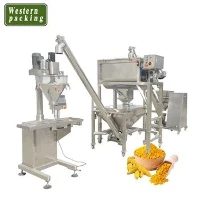
Powder products, on the other hand, are trickier. Fine powders (flour, protein, pharmaceutical ingredients) can clump, cause static electricity, or leak through seal lines, pushing waste rates higher. A Powder Packing Machine 1Kg, for instance, might have a baseline of 1% to 2.5% waste, while a 500G Powder Packing Machine often sits at the higher end of that range. Why smaller batches? Startup and shutdown cycles play a bigger role for low-volume runs: every time you load a new film roll or switch product SKUs, you have to run a test strip of 5 to 10 bags to calibrate the filler, and those are counted as waste. For a 500G machine running at 10 bags per minute, that’s 5% of a 1-hour shift lost just to setup waste—no wonder the overall rate creeps up.
Packaging size also matters. A Packaging Machine 1Kg will generally have lower waste than its 500G counterpart because larger bags mean fewer setup adjustments relative to total output. Smaller bags require more precise cutting, more frequent film roll changes, and more frequent seal parameter tweaks, all of which add up. I’ve worked with a specialty coffee roaster that switched from a 500G powder machine to a 1Kg version for their whole beans, and their waste dropped from 2.2% to 1.1% in a month—all because they reduced the number of test runs and seal calibration steps per shift.
Now, let’s talk about what pushes waste rates above that 2% baseline. The biggest culprit is poor machine maintenance. Vertical packing machines have moving parts: film rollers, seal jaws, fill heads, and sensors, all of which wear down over time. A seal jaw with a broken heating element, for example, will create weak seals that burst during shipping, resulting in 10 to 20 wasted bags per run. Or a film guide roller that’s out of alignment will cut off-center bags, leaving half of every reel unusable. I once visited a plant where a machine’s sensor was coated in dust, so it underfilled every bag by 15 grams—they were throwing away 300 bags a day, totaling 4.2% waste, until we cleaned and calibrated the sensor. Operator skill is another factor: a new operator might not notice a tiny film tear or adjust the fill rate for a sudden change in product density, leading to avoidable waste.
Product type itself is a constant variable. Sticky products (like marshmallow bits, cheese powder, or wet pet food) are a nightmare for vertical packing machines. They can clog fill heads, stick to seal jaws, or cause film to wrinkle, all of which increase rejects. I’ve seen a snack manufacturer use a standard automatic vertical packing machine for chocolate candies and hit 3.5% waste—until they switched to a machine with heated seal jaws and anti-clog fill heads, dropping waste to 1.8%. Humidity and temperature in the production space also play a role: high humidity can make granule bags stick together, while low humidity makes static cling ruin powder fills. These are environmental factors, but they’re tied to how the machine is set up for its space.
So, what can you do to lower your vertical packing machine’s waste rate? First, start with the right machine for your product. If you’re packaging granules, don’t use a powder machine—you’ll waste more on clogs. If you’re running 500G or smaller batches, look for a vertical packing machine designed for low-volume, high-precision runs, not a high-speed machine built for 50lb bulk bags. Second, implement a regular maintenance schedule: clean sensors every shift, inspect seal jaws monthly, and calibrate the fill system quarterly. Third, train your operators to spot early signs of waste: a slightly off film cut, a seal that’s bubbling, or a fill rate that’s inconsistent—catching these early can prevent hundreds of wasted bags a day.
At the end of the day, waste rate isn’t a static number. It’s a metric that tells you how well your machine is matching your product, your space, and your team. If your waste rate is consistently above 2.5%, it’s worth looking at your machine’s setup, maintenance, or even whether it’s the right fit for your needs. I’ve helped dozens of customers cut their waste by 30% to 50% just by adjusting calibration or upgrading parts—you don’t always need a whole new machine.
If you’re ready to assess your current vertical packing machine’s waste rate or find a solution tailored to your products, we’re here to help. Our team has decades of experience working with snack, pharma, and agricultural manufacturers, and we can walk you through options from automatic vertical packing machines for high-volume runs to specialized granule or powder packing equipment.
References
- Industrial Packaging Association. (2022). Efficiency Metrics for Vertical Form-Fill-Seal Machines. National Bureau of Packaging and Processing.
- Smith, J. (2021). Reducing Production Waste in Food Packaging: A Case Study of Vertical Packing Systems. Journal of Manufacturing Operations, 18(2), 45-52.
- Global Packing Machinery Association. (2023). Maintenance Best Practices for Vertical Packing Equipment. International Standards for Packaging Machinery.