

Hey there! As a supplier of Snacks Packing Machines, I often get asked about the production capacity of high - end snacks packing machines. So, I thought I'd spill the beans and share all the details with you.
First off, let's understand why the production capacity of a snacks packing machine is so crucial. In the snack business, time is money. A machine with a higher production capacity means you can pack more snacks in less time. This allows you to meet the high - demand of the market, especially during peak seasons. Whether you're a small - scale startup or a large - scale manufacturer, the right production capacity can make or break your profitability.
Now, what factors affect the production capacity of a high - end snacks packing machine? Well, there are quite a few.
1. Machine Type
There are different types of snacks packing machines, and each has its own production capabilities. For example, the Snack Food Potato Chips Packing Machine is designed specifically for packing potato chips. These machines typically have a high - speed operation because potato chips are a popular snack with high demand. They can pack anywhere from 60 to 150 bags per minute, depending on the size of the bags and the complexity of the packing process.
On the other hand, the Snack Vertical Packing Machine is versatile and can be used for various types of snacks, including candies, nuts, and small cookies. Its production capacity usually ranges from 40 to 120 bags per minute. The vertical design allows for efficient use of space and a relatively simple packing process.
The Snack Nitrogen Gas Food Packing Machine is a bit different. This machine is used to pack snacks with nitrogen gas to extend their shelf - life. Due to the additional step of injecting nitrogen, the production capacity might be a bit lower compared to regular packing machines. It can generally pack 30 to 100 bags per minute.
2. Bag Size and Shape
The size and shape of the bags you want to use for packing also have a significant impact on the production capacity. Larger bags take more time to fill and seal, so the machine can produce fewer of them per minute. Similarly, irregularly shaped bags might require more precise handling, which can slow down the packing process.
For example, if you're using a standard rectangular small - sized bag for packing snacks, the machine can pack more of these in a given time compared to a large - sized or oddly - shaped bag. Some high - end machines can adjust to different bag sizes and shapes, but the production capacity might still vary accordingly.
3. Snack Characteristics
The type of snack you're packing matters too. Light and fluffy snacks like popcorn or puffed rice are easier to handle and can be packed at a faster rate. In contrast, sticky or chunky snacks like caramel - coated nuts or chocolate - covered pretzels can be more difficult to pack. The machine might need to move more slowly to ensure that the snacks are properly filled and the bags are sealed correctly.
4. Automation Level
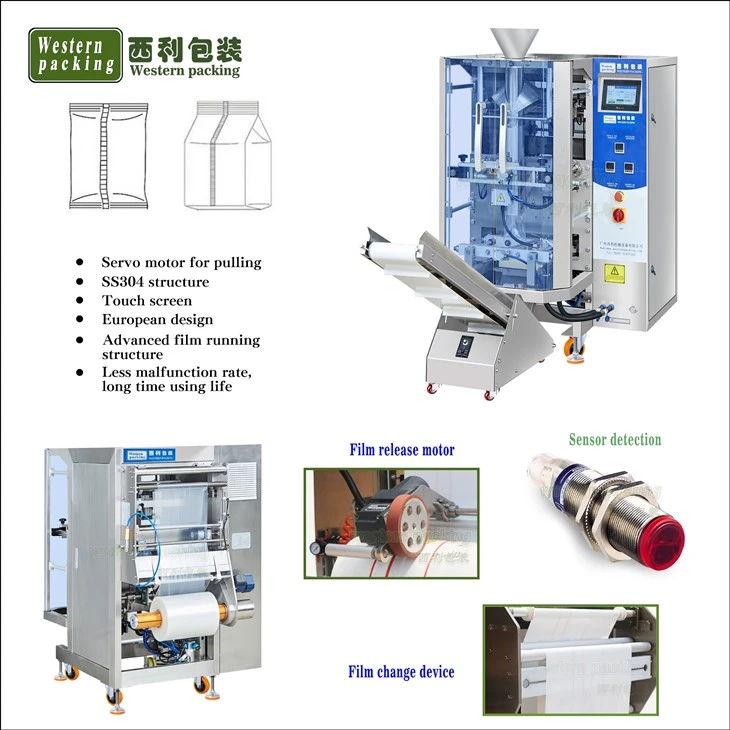
High - end snacks packing machines come with different levels of automation. The Snacks Packing Machine Automatic is designed to perform multiple tasks automatically, such as feeding the snacks, forming the bags, filling them, and sealing. These fully automated machines can significantly increase the production capacity as they reduce the need for manual intervention and can work continuously without breaks.
Semi - automatic machines, on the other hand, require some manual input. For example, an operator might need to place the snacks into a hopper or adjust the bag - forming process occasionally. These machines generally have a lower production capacity compared to fully automatic ones.
Examples of Production Capacity in Real - World Settings
Let's say you have a medium - sized snack manufacturing company that produces a variety of snacks. You decide to invest in a high - end Snack Food Packing Machine. If you're packing small bags of mixed nuts with an automated machine, you could potentially achieve a production capacity of around 100 to 120 bags per minute. This means that in an 8 - hour workday, you could pack approximately 48,000 to 57,600 bags.
If you switch to packing larger bags of beef jerky, the production capacity might drop to around 60 to 80 bags per minute. So, in an 8 - hour shift, you'd be looking at packing around 28,800 to 38,400 bags.
When choosing a snacks packing machine based on production capacity, you need to consider your current production needs as well as your future growth plans. If you anticipate an increase in demand in the coming years, it's a good idea to invest in a machine with a higher production capacity right from the start. However, if you're just starting out and have a limited budget, you might opt for a machine with a lower production capacity and upgrade later.

In conclusion, the production capacity of a high - end snacks packing machine can vary widely depending on several factors. By understanding these factors, you can make an informed decision about which machine is right for your snack business. If you're interested in learning more about our snacks packing machines or have any questions regarding production capacity, feel free to reach out to us. We're here to help you find the perfect solution for your packing needs.
References
- Industry reports on snacks packing machine technology.
- Manufacturer's specifications for various snacks packing machines.


