
If you’ve ever walked past a roadside stall in Southeast Asia, a gym locker room, or a budget hotel’s bath amenities shelf, you’ve probably grabbed a single-use shampoo pouch without even thinking twice about it. Those tiny, lightweight sachets are everywhere, and if you’re in the business of making them, one of the first questions you’ll ask is: what’s the real packing speed of a shampoo pouch packing machine? I get it—when you’re scaling production, cutting lead times, and keeping costs in check, speed isn’t just a nice-to-have. It’s the backbone of your bottom line. As a supplier who’s worked with small local brands and big global FMCG names, I’ve fielded this question a hundred times, so let’s break it down straight, no jargon, no fluff.
First off, let’s clarify: there’s no one-size-fits-all answer here. The packing speed of a shampoo pouch packing machine depends on way more than just the machine itself. Think of it like driving a car—you can get 60 mph on an empty highway, but if you’re stuck in traffic, hauling a heavy trailer, or taking a sharp turn, your speed drops, right? Same logic applies here. Before we dive into actual numbers, let’s talk about the variables that shape that speed, because that’s where most buyers go wrong. They see a generic “X pouches per minute” spec and think that’s what they’ll get, but real-world conditions change everything.


First, the type of machine you’re using. Not all shampoo pouch packing machines are the same. If you’re packing small, single-dose sachets (the 5ml to 20ml ones you see in hotels), you’ll have different speeds than if you’re packing 100ml salon-sized pouches. Let’s run through the main categories you’ll come across, and their typical speeds.
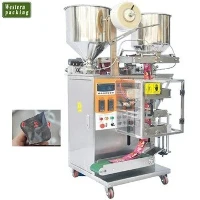
First up, the Hair Shampoo Packing Machine—this is the workhorse for most sachet shampoo production. Most of these are vertical form-fill-seal (VFFS) systems, better known as Vertical Ffs Machines. For standard 10ml-20ml sachets, a well-calibrated VFFS machine will crank out 60 to 120 pouches per minute (PPM) in single-lane mode. Wait, single-lane? That’s right—those numbers are for one lane. If you need way more output, you’ll look at a Multi Lane Packing Machine, which is basically multiple single-lane units on one frame, running in parallel. A 4-lane multi-lane shampoo packing machine can hit 240 to 480 PPM, and some high-speed models even push 600 PPM for small, consistent sachets. That’s a game-changer for brands that need to fill tens of thousands of pouches a day without adding too much floor space.
But wait, what about if you’re using a different kind of machine? Like a Sachet Packaging Machine that’s horizontal? Horizontal sachet machines are usually for larger pouches, like the 200ml or 500ml ones sold in grocery stores. Their speeds are slower—usually 20 to 60 PPM, because the pouches are bigger, take longer to form and seal. That makes sense, right? You can’t fold and seal a 500ml pouch as fast as a tiny 10ml one. And then there’s the Liquid Packaging Machine category, which includes specialty units for thick shampoo, not just thin, watery formulas. If your shampoo has a lot of conditioning agents that make it thick, the filling nozzle has to move slower to avoid drips, so that’ll cut your speed by 10-20% too. That’s a key point I always tell new customers—thicker product = slower speed, no exceptions.
Now, let’s get into the nitty-gritty of what affects those numbers, because they’re not set in stone. Let’s start with pouch size and material. If you’re running a 5ml sample pouch, the film is thin, the forming dies are small, and the filling time is just a split second. But if you’re running a 50ml pouch with a thicker, more durable laminate film, the machine has to stretch the film, seal it, and cut it slower to avoid creases, so speed drops. I had a customer last year who switched from 15ml to 30ml sachets for their brand, and their output dropped from 100 PPM to 75 PPM—just because the pouch was bigger. That’s a small change but a big hit to daily volume, so it’s something to plan for.
Next, product viscosity. Like I mentioned earlier, shampoo isn’t a single liquid. Some are thin, like dish soap, while others are thick, almost like gel, with lots of silicones and conditioning oils. If your filling nozzle is pumping thin shampoo, it can fill a sachet in 0.2 seconds. Thick shampoo? That takes 0.5 to 0.7 seconds, because the product has to flow through the nozzle without clogging or creating air bubbles. I’ve seen a brand run into this when they launched a new “ultra-moisturizing” shampoo—their thin-shampoo machine clogged every 20 minutes, so they had to slow down to 50 PPM to keep it running. Fixing it meant upgrading the nozzle to a wider one, which let them get back to 80 PPM, but that’s a change you have to budget for upfront.
Then there’s downtime. No machine runs 24/7 without stops. How often do you have to reload film rolls? Change nozzles? Clean the system? Fix small clogs? For a small brand running a single-shift, their actual “operating speed” might be 70% of the theoretical maximum. That means if your machine is rated for 100 PPM, you’re actually getting 70 PPM after accounting for downtime. For a big brand running three shifts, with a maintenance team on-site, that efficiency can jump to 90% or more. That’s why theoretical speed specs are marketing fluff—you have to look at real-world efficiency.
What about if you’re a small business, not a huge FMCG brand? Let’s say you’re a local shampoo maker with a line that does 5,000 pouches a day. You don’t need a high-speed multi-lane machine, right? A single-lane vertical shampoo pouch packing machine will do the job. Its speed will be around 60-80 PPM, which works out to 3,600-4,800 pouches per hour—so even a single 8-hour shift gets you way more than 5,000, with room to spare. I always tell small buyers not to overbuy speed. If you only need 10,000 pouches a day, dropping $50k on a 600 PPM multi-lane machine is a waste. But if you’re supplying to 10,000 hotels across Southeast Asia, that high-speed machine is worth every penny.
Another factor: setup and calibration. A machine that’s not set up right will run slower. I’ve had customers receive a new machine, hook it up, and get 40 PPM instead of the rated 100 PPM, just because they didn’t calibrate the seal time or adjust the film tension. That’s where a good supplier comes in—someone who will not only sell you the machine, but also help with setup, training, and troubleshooting. I always send my customers a step-by-step calibration guide, plus a video call with our tech team for the first two weeks, so they don’t waste time running a machine at half speed.
Wait, let’s talk about common myths I hear all the time. One is: “more lanes = faster speed.” That’s true if you have the right product and setup, but if you’re running a thick shampoo, a multi-lane machine might have to slow all lanes down to avoid clogs, so you don’t get the full 4x speed you’d expect from 4 lanes. Another myth is: horizontal machines are always slower. No, they’re just for different jobs. If you need a stand-up pouch with a zip-lock, horizontal machines can pack them at 30-50 PPM, which is perfect for salon-sized pouches. Vertical machines are better for small, flat sachets, which are faster.
Let me give you a real example from a customer I worked with last quarter. They’re a mid-sized brand that makes organic shampoo in 15ml sachets for travel. They started with a single-lane vertical machine, rated at 100 PPM, and they were getting 70 PPM on average, which was 4,200 pouches per hour. When their orders jumped to 120,000 pouches a month, they upgraded to a 3-lane multi-lane machine. The theoretical speed was 300 PPM, but because their organic shampoo is a bit thicker than regular shampoo, they settled at 220 PPM with 85% efficiency. That works out to 13,200 pouches per hour—way more than they needed, and they avoided having to buy two more single-lane machines. That’s exactly the kind of balance you want: matching speed to your actual demand, not just chasing the highest number.
Now, what about maintenance? If you want to keep that speed consistent, you have to do regular upkeep. Every week, you should clean the filling nozzles to prevent buildup from shampoo oils and surfactants. Every month, check the seal bars for wear—worn seal bars can cause bad seals, which lead to leaks and downtime. Every quarter, lubricate the moving parts. I had a customer who skipped monthly maintenance, and their machine’s speed dropped from 100 PPM to 50 PPM in six months, just because the gears were worn and not moving smoothly. That’s a costly mistake—slower speed means more labor, more downtime, and more waste from bad pouches.
If you’re shopping around for a shampoo pouch packing machine, here’s my pro tip: don’t just ask for the maximum PPM. Ask for the real-world speed for your specific pouch size, your shampoo’s viscosity, and your daily output needs. A good supplier will ask you these questions first, not just throw a number at you. They should also be able to show you test runs—many suppliers will let you send a sample pouch and a sample of your shampoo, and run a test to show you exactly how fast the machine will go for your product. That’s way more reliable than a spec sheet.
At the end of the day, the packing speed of a shampoo pouch packing machine isn’t a fixed number. It’s a formula that depends on your machine type, pouch size, product viscosity, maintenance, and how well it’s calibrated. For most small to mid-sized brands, 60-120 PPM per single lane is the sweet spot, while large-scale brands can leverage multi-lane machines for 200+ PPM. The key is to match the machine’s speed to your actual production needs, not the flashiest spec.
If you’re ready to find a machine that fits your needs, don’t hesitate to reach out. Whether you’re a small local brand just starting out or a big FMCG company scaling production, we can help you find the right solution that balances speed, reliability, and cost. We offer a range of packaging equipment, from single-lane vertical machines to high-speed multi-lane systems, all tailored to work with your specific shampoo formula and pouch requirements. So if you’re tired of guessing about packing speeds and want a real, customized solution, get in touch.
References:
- International Society of Packaging Professionals. (2022). Sachet Packaging Equipment Performance Guidelines. ISPP Press.
- FMCG Manufacturing Technology Association. (2023). Liquid Packaging Efficiency and Speed Best Practices. FMCTA Technical Report.
- Global Industry Analysts. (2024). Single-Use Personal Care Packaging Market: Equipment Speed and Capacity Analysis. GIA Market Research.
- Food and Agriculture Organization of the United Nations. (2021). Small-Scale Liquid Packaging for Personal Care Products. FAO Value Addition Series.