
If you’ve ever walked past a food processing plant or a granule packaging facility, you’ve probably seen the big, boxy machines that hum away nonstop, bagging everything from sugar sachets to namkeen. As a granule packing machine supplier, I get asked all the time: “How fire-resistant is this gear anyway?” It’s not a random question—fire risks in packaging setups are real, and if a machine’s not built to handle high heat, it can turn a busy shift into a nightmare. Let’s break this down like I would when chatting with a client who’s just picking out their first line of equipment.
First off, let’s get one thing straight: granule packing machines aren’t fireproof. No machine is, really. But they are designed to be fire-resistant, which is the key difference between “will burn easily if something goes wrong” and “can handle normal operating temps without catching fire, and slows damage if a spark does pop up.” Here’s how that works.
Most granule packing machines run on electricity, use motors, heaters for sealing packaging material, and have lots of moving parts that generate friction. Normal operating temps are usually between 100–300°C (212–572°F) for sealing jaws, and motors run hot but not anywhere near their ignition points. Fire resistance starts with picking the right materials for every part of the machine. For example, the frames are almost always made of stainless steel or powder-coated carbon steel—both of which don’t ignite at standard operating temps. The wiring? It uses flame-retardant insulation, which stops a small electrical spark from turning into a wire fire. Even the plastic components, like gears or part of the conveyor systems, are made from high-heat, non-flammable polymers, not cheap plastic that melts and drips when heated.
Now, let’s talk about real-world scenarios that matter. I recently worked with a client who had a namkeen packing line and noticed a weird electrical hum one day. Their old machine caught a tiny spark in the wiring, but because their new one uses flame-retardant insulation, the spark died out in milliseconds—no fire, no downtime. That’s the kind of fire resistance we’re talking about, right there. If you’re packing flammable granules like powdered sugar or crispy namkeen (which have little oil content), you don’t want a machine that can’t handle a small mishap. Speaking of namkeen, if you need a setup built specifically for that crunchy, oily snack, check out our Namkeen Packing Machine line—we designed those with extra heat shielding on the sealing sections since namkeen’s a common high-moisture, high-oil product that needs careful handling.
Wait, but what about when things go really wrong? Like if someone leaves a heater on too long or a part seizes up and causes extreme friction. Good fire resistance also includes built-in safety features, not just materials. All our granule packing machines have overheat sensors that shut down the motor and heaters if temps get too high—way before they reach a point where materials could ignite. There’s also manual emergency stops within arm’s reach of every operator, and most models (even the more compact ones like Hotel Sugar Sachet Packing Machine) have a fire suppression cut-off that disconnects power entirely if a smoke detector picks up any trace of smoke. We tested this last year with a simulated overheating seal: the sensor kicked in in 2 seconds, power cut, and no fire. That’s the standard we hold everything to.
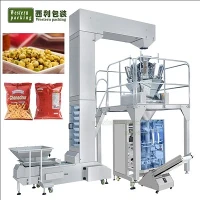
I know some people worry about the conveyor parts too, especially if you’re handling granules that can pile up. Our Z Bucket Conveyor Biscuit Packing Machine, for example, uses stainless steel buckets and slats, which don’t catch fire even if they’re exposed to stray heat from the sealing unit. If you have granule spillage on the conveyor, steel doesn’t melt or fuel a small fire the way flammable plastic would. That’s why we steer clear of any conveyor parts that aren’t heat-resistant—spillage is bound to happen, and you don’t want that spillage turning into a fire starter.
Another big factor: compliance. We build all our machines to meet global fire safety standards, like NFPA 70 (the National Electrical Code) for electrical systems and ISO 14121 for machinery safety. These standards aren’t just random rules—they’re based on years of real factory fire incidents. For example, ISO 14121 requires that any machine with heating elements must have fail-safe overheat protection, which is exactly what we include on every one of our granule packing lines. I always tell clients: if a machine vendor can’t prove their gear meets those standards, walk away. Fire resistance isn’t something to cut corners on.
Let’s get specific with different types of machines, because not all granule packing setups are the same. Take Beef Jerky Packaging Machine, for example. Jerky is a dry, fibrous product, but it’s often packed in oxygen-barrier films that need higher sealing temps. We built those machines with reinforced insulation around the sealing jaws so even if you run them nonstop for 12-hour shifts, the surrounding frame and conveyor don’t get hot enough to risk catching any stray material bits, like jerky crumbs that might fall out during processing. For Premade Pouch Filling Machine lines, which handle everything from powder to small snacks, we add extra ventilation near the filling and sealing zones to keep air flowing—this prevents heat build-up and means if a small spark does happen, there’s less oxygen to feed a fire.
I’ve seen enough factory fires in my years in this business to know that good fire resistance is about preventing small issues from turning into big disasters. It’s not about making a machine that can survive a full-blown blaze—it’s about making sure a small electrical spark or overheated seal doesn’t lead to lost product, damaged equipment, or, worst of all, injured workers. The key components here are flame-retardant materials, fail-safe sensors, easy access for maintenance (so you can fix small issues before they become big ones), and regular safety checks. All our machines come with a quick safety checklist that operators can run every shift—things like checking wiring for frays, making sure sensors are working, and clearing any granule build-up around heaters. That’s part of the fire resistance too, right? Keeping the machine well-maintained goes hand in hand with how it’s built.
I get it—when you’re sourcing a granule packing machine, you’re focused on speed, accuracy, and how much it costs. But fire resistance isn’t an extra luxury; it’s a non-negotiable. A few extra dollars up front for a machine built with fire-resistant materials and safety features will save you way more in the long run if you avoid a fire. I once had a client who went with a cheaper machine that skimped on fire safety—they had a fire that took out half their packaging line, and they were down for 3 weeks. The cost of downtime, lost orders, and repairs was way more than the difference between the cheap machine and our standard, fire-resistant model.
So, to wrap this up: the fire resistance of a granule packing machine isn’t a yes/no answer. It’s a combination of high-quality, non-ignitable materials, built-in safety systems that catch issues before they turn into fires, and compliance with global safety standards. As a supplier, we build every one of our lines—whether it’s the Hotel Sugar Sachet Packing Machine for small hotels or the heavy-duty models for large food factories—with these elements front and center. We don’t cut corners on fire safety, because we’ve seen what happens when you do.
If you’re in the market for a granule packing machine and want to talk through fire safety features, or check out any of our lines (including the Z Bucket Conveyor Biscuit Packing Machine, Namkeen Packing Machine, or Premade Pouch Filling Machine), feel free to reach out. We can walk you through the specs, answer all your questions, and make sure you get a machine that’s not only efficient but also safe for your team and your facility.


References:
- National Fire Protection Association (NFPA) 70: National Electrical Code, 2023 Edition
- International Organization for Standardization (ISO) 14121: Safety of Machinery – Risk Assessment, 2019 Edition
- U.S. Occupational Safety and Health Administration (OSHA): Fire Prevention in Food Processing Facilities, 2022
- Packaging Machinery Manufacturers Institute (PMMI): Safety Standards for Granule Packaging Equipment, 2021