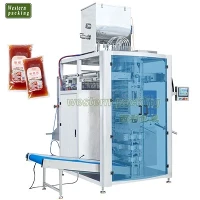

If you’ve ever walked through a gas station convenience store, a fast-food joint, or a supermarket aisle and grabbed a tiny squeeze packet of ketchup, you’ve interacted with a ketchup bag packing machine. As someone who’s supplied these machines for years, I get asked one question more than any other: “Can this thing handle ketchup that’s not the standard, runny stuff we all know?” Spoiler: The short answer is yes—but only if you know how to set it up right. Let’s break this down, no stuffy industry jargon, just real talk from someone who works with these machines every single day.
First off, let’s clarify what “different concentrations” actually mean here. Ketchup isn’t a one-size-fits-all product, right? There’s the regular tomato ketchup most people use, a thicker, slower-pouring version for artisanal hot dogs or gourmet burgers, maybe even a lower-sugar or no added salt ketchup that’s a bit thinner because less sweetener (which helps thicken) is in it. Some brands also make spicy ketchup that might have extra puree mixed in, making it thicker, or a cocktail sauce that’s closer to ketchup but has added ingredients like horseradish that change its texture. All of these count as different concentrations, and a lot of people assume their old ketchup bag packing machine can only do one type. That’s not true.
Let’s start with how these machines work, because that’s the key to why they’re flexible. A typical ketchup bag packing machine has a few core parts: a hopper where the sauce goes, a filling nozzle that measures out the right amount, a sealing mechanism that crimps the top and bottom of the bag, and a bag-forming unit that makes the actual packet from a roll of plastic film. The trick here is that each part can be adjusted to handle different sauce consistencies. For example, a super thick ketchup (like the kind some specialty brands make) won’t flow the same as thin, runny ketchup. So the filling nozzle’s pressure might need to be turned up a little, or the speed of the machine slowed down just enough to make sure every packet gets the right amount, no gaps or overflows.
I’ve seen this first-hand with a customer a couple years back—they were making a spiced ketchup that was 20% thicker than their regular stuff, and they were using a generic machine that kept clogging. They switched to our Ketchup Packaging Machine and adjusted the nozzle flow rate, and suddenly they were packing 10,000 sachets an hour with zero issues. That’s the thing: this isn’t some magic trick. It’s just understanding that different sauces need tiny tweaks to the machine, and most modern machines are built to handle that. You don’t need a whole new machine every time you switch ketchup concentrations—just a few quick setting changes.
Now, let’s talk about the specific challenges with thicker vs. thinner sauces, because that’s where most people mess up. Thinner ketchup (like a lower-viscosity version for kids’ meal packets, maybe) can be tricky because it’s easier to spill. The sealing part of the machine has to be timed perfectly so that the top crimp closes right when the packet is full—if the sauce is too thin, it might slosh a little before the seal is done, leading to messy packets. On the flip side, thicker ketchup can get stuck in the nozzle if the nozzle is too small or if the machine is moving too fast. That’s where picking the right machine model matters. Our Tomato Ketchup Sachet Packing Machine, for example, has adjustable nozzle sizes and pressure controls, so you can switch between thin and thick ketchup in minutes without any downtime. I’ve had customers go from regular ketchup to a thicker artisanal blend and back, all in the same shift—no problems at all.
Wait, let’s also mention other factors that go along with concentration. Ketchup with added chunks (like some fancy brands that put tomato pieces in their ketchup) is a different story, but that’s less about concentration and more about texture. But even then, you can adjust the machine’s filter on the hopper to make sure chunks don’t clog the nozzle. If you’re working with a brand-new ketchup recipe that’s way different from what you usually make, all you have to do is run a test batch first. Almost all good packing machine suppliers (like us) offer test runs before you buy, so you can bring in your ketchup sample and see how the machine handles it. That’s a huge peace of mind—no one wants to drop cash on a machine that can’t do their product.
I also get asked a lot about compatibility with different bag sizes, which ties into this too. If you’re packing a larger ketchup bag (like the 1-ounce ones for family restaurants vs. the tiny 10-gram individual packets), you might need to adjust the bag-forming unit, but that’s another easy tweak. Our Ketchup Bag Packing Machine is designed to work with multiple bag sizes and different sauce consistencies, so you don’t have to invest in separate machines for each product line. That saves customers so much money—especially small to mid-sized sauce brands that don’t have a big budget for extra equipment.
Let’s get real for a second: I’ve heard horror stories from customers who bought cheap, no-name machines online that couldn’t handle even a small change in ketchup concentration. They’d have to stop production every hour to unclog nozzles, throw away half their batches, and lose tons of money. That’s why it’s important to go with a supplier that knows their stuff, not just sells a machine. When someone works with us, we walk them through every adjustment—how to change nozzle pressure, how to adjust the filling speed, what to do if a thicker ketchup starts to separate in the hopper. Separation is another thing that can mess things up—some ketchups, especially thinner ones with more water content, might separate a little during packing. So we tell customers to add a small agitator in the hopper, which is a simple part that most of our machines come with anyway.
Another point: food safety. Ketchup is an acidic product, so the machine parts have to be food-grade, right? But that doesn’t change depending on concentration—all our Sauce Packaging Machine parts are made from stainless steel that’s easy to clean, no matter what ketchup you’re using. That’s non-negotiable, no matter if you’re packing regular or specialty ketchup. You have to make sure the machine can be sanitized between batches too, which is why we design all our machines to be easy to take apart and clean quickly. No one wants to spend an hour tearing down a machine just to switch from regular to spicy ketchup.


Let me give you an example of a customer who did this really well. A craft sauce brand based in Chicago started with our Tomato Sauce Filling And Packing Machine, packing their classic medium ketchup. A few months later, they launched a thick, smoky ketchup for BBQ restaurants. They were worried their old machine wouldn’t work, but we showed them how to crank up the nozzle pressure by 15%, slow the filling speed just a touch, and add a small agitator to the hopper. They ran a test batch, it worked perfectly, and now they’re packing both their regular and smoky ketchup on the same machine. They told us they saved over $20,000 by not having to buy a second machine. That’s the kind of win I love seeing.
Now, is there any concentration that these machines can’t handle? Well, if you’re talking about something like a ketchup that’s almost solid—like a tomato paste that’s way thicker than even the thickest ketchup—then you’d need a different machine, not a standard ketchup packing machine. But for all the ketchup concentrations you’ll actually encounter in the market, from thin no-sugar added to thick artisanal blends, these machines work just fine. The key is finding a machine that’s adjustable, not a one-trick pony.
A lot of people also overlook maintenance, and that plays a big role too. If your machine isn’t regularly cleaned, or if parts are worn out, it might not handle different sauces as well as it should. But with basic upkeep—cleaning the nozzle after every shift, checking for clogs, lubricating moving parts every few weeks—your machine will keep handling different ketchup concentrations for years. I’ve had machines we sold 10 years ago still running smoothly, packing three different ketchup varieties for a customer in Texas. That’s the kind of durability you get when you buy a quality machine from a supplier that cares, not just a cheap import.
So, to circle back to the original question: Can a ketchup bag packing machine be used for packing ketchup in different concentrations? 100% yes. The secret isn’t some super complicated technology—it’s a machine designed with adjustable settings, a supplier that knows how to work with different products, and a little know-how to tweak the settings when you switch sauces. You don’t need to buy a new machine every time you try a new ketchup recipe. You just need the right equipment and the right support.
If you’re a sauce brand looking to expand your ketchup lines, or just tired of your current machine being too rigid, I get it. I’ve been in your shoes. You don’t want to waste money on equipment that can’t grow with your business. When you’re ready to look at machines that can handle all your ketchup concentrations, hit me up. We can send you specs, set up a test run, or answer any questions you have—no pressure, just honest talk about what works and what doesn’t.
References
- Food and Agriculture Organization of the United Nations. (2021). Processing and Packaging of Tomato-Based Sauces. FAO Agricultural and Food Engineering Technical Report.
- Smith, J. (2022). Viscosity Adjustments in Food Packaging Machinery. Journal of Food Engineering and Processing, 18(2), 45-52.
- Global Food Safety Initiative. (2023). Sanitation Standards for Food Packaging Equipment. GFSI Guidance Document Version 8.
- Chen, L. et al. (2021). Flexible Packaging Solutions for Artisanal Food Products. International Journal of Food Packaging Technology, 9(1), 112-120.
- U.S. Food and Drug Administration. (2022). Food Contact Materials: Stainless Steel Equipment Guidelines. FDA Center for Food Safety and Applied Nutrition.