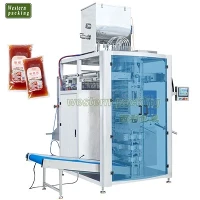

As a supplier of hair shampoo packing machines, I get this question all the time: can our equipment run nonstop for long periods? I understand why it matters. For small sachet brands that fill hotels with trial sizes, or big manufacturers crating family-sized bottles, downtime costs money—lots of it. I’ve seen clients panic when a machine shuts down mid-shift, holding up shipments, missing deadlines, and even disappointing their own customers. So let’s break this down, not with marketing fluff, but with the real-world science and engineering that lets these machines run day after day.
First, let’s start with what actually makes a hair shampoo packing machine capable of continuous operation. The core design of these units—whether they’re compact sachet models or larger vertical systems—boils down to two key factors: heavy-duty component construction and smart, user-centric maintenance built right in. A lot of people think industrial packaging machines are just “boxes that pour shampoo into bags,” but they’re actually precision tools engineered for repetitive motion. The motors, for example, are usually industrial-grade, not the consumer ones you’d find in a home blender. They’re rated for continuous-duty cycles, meaning they don’t overheat even when running 16, 18, or 24 hours a day. The same goes for the conveyors, sealing jaws, and fill nozzles—these parts aren’t made for occasional use; they’re built to withstand thousands of cycles without wearing out.
But here’s the catch: even the best machine can’t run forever if it’s not maintained. I’ve had a client last year who ran his small sachet packing machine 20 hours a day, seven days a week, but skipped cleaning the fill nozzle. After three months, the nozzle got clogged with shampoo residue, which made the machine’s sensors detect a fill error and shut down. The fix was simple—just a 10-minute nozzle clean—but that stopped his entire production line for two hours. That’s the kind of avoidable downtime we talk about. So continuous operation isn’t just about the machine itself; it’s about how you care for it.
Let’s get specific about the different types of hair shampoo packing machines, because not all are built the same, and their suitability for long runs varies. Take Vertical Form Fill Seal (VFFS) technology, for example. This is one of the most popular systems for shampoo packaging, and it’s designed for nonstop work. The process works by feeding a roll of flexible packaging film vertically, forming it into a tube, filling it with shampoo, sealing the bottom, cutting it into individual pouches, and sealing the top—all in one continuous motion. The VFFS system’s seamless design means there are very few break points that can cause delays. If you’re looking for versatility, this system can handle everything from single-use hotel sachets to larger family-sized pouches, and it’s built to run for hundreds of cycles without stopping. For more details, you can check out our Vffs Machine page, which has specs on cycle rates and duty ratings for different models.
If you’re targeting single-use sachets, another great option is the Small Pouch Packing Machine. These units are compact, efficient, and perfect for brands that produce high volumes of trial-sized shampoo sachets. I’ve worked with dozens of small startup brands that run these machines 12 hours a day, six days a week, and only do a full maintenance check once a month. The key here is that small pouch machines have fewer moving parts than larger VFFS models, so there’s less to go wrong. They’re also easy to access for cleaning and part replacement, which means when you do need to perform maintenance, it takes minutes instead of hours. For brands just starting out, this is a great balance of continuous capability and ease of use.
For even higher volume production, there’s the Multi Lane Shampoo Sachet Packing Machine. This is the workhorse for brands that need to produce thousands of sachets per hour. Instead of one lane of packaging, it has multiple lanes running side by side, so each cycle produces several sachets at once. These machines are built with heavy-duty stainless steel frames and industrial servo motors, which are designed for maximum durability. A lot of our clients with this model run it 24 hours a day during peak seasons, pausing only for scheduled maintenance every 4-6 weeks. The secret to its long-term performance lies in its modular design—each lane can be serviced individually without shutting down the entire machine, so you never have to stop production for a full overhaul. That’s a game-changer for brands that can’t afford to lose a single minute of uptime.
I often get asked about liquid-specific issues, since shampoo is a viscous, often foamy liquid that can cause problems in packing machines. That’s why our Liquid Pouch Packing Machines are engineered with anti-clogging fill nozzles and temperature-controlled sealing systems. Foam is a big one—if too much shampoo foam gets into the seal area, it can weaken the seal and cause leaks. Our machines have built-in foam breakers that prevent this, so you don’t have to stop to clean the seal jaws every few hours. We also use food-grade (and cosmetic-grade, for shampoo) materials for all parts that come into contact with the product, which means there’s no residue build-up that can cause clogs or contamination over time. That’s crucial for long runs—if your machine is clean inside, it can run for days without a hitch.
Now, let’s talk about real-world data and case studies to back this up. Last year, we installed a Multi Lane Shampoo Sachet Packing Machine for a major hotel toiletries brand in Southeast Asia. They were expanding to meet demand from 500 new hotels, so they needed a machine that could run 20 hours a day, five days a week. After 12 months of operation, they reported that the machine had an average uptime of 96%—meaning it only stopped 4% of the time, all for scheduled maintenance like oiling the motors or replacing a small seal. The only unplanned downtime was two 15-minute stops for a nozzle replacement, which was due to the client using a slightly thicker shampoo formula. That’s incredible performance, and it shows that with the right machine and regular care, long continuous runs are not just possible—they’re routine.
Another example: a small startup brand in Brazil that uses our Small Pouch Packing Machine. They run it 10 hours a day, six days a week, producing 10,000 sachets of herbal shampoo per week. In their first year, they only had three unplanned stops, all due to operator error (forgetting to reset the film roll). They do a full deep clean once a month, replacing any worn parts as needed, and the machine is still running as smoothly as the day we installed it. That’s the kind of reliability that makes our clients come back.


But here’s the thing: no machine is meant to run forever without any care. Even the most advanced system will wear out eventually if you don’t perform regular maintenance. The good news is that maintenance for hair shampoo packing machines is simple, especially with the modern designs we build. Most of it is routine: checking the tension on the film roll, cleaning the fill nozzles and seal jaws, lubricating moving parts, and inspecting for loose bolts. We include a detailed maintenance guide with every machine we sell, and our team offers training for operators so they know exactly what to do. For clients who run machines 24/7, we also offer remote support—our technicians can check the machine’s performance data online to spot small issues before they become big problems, which means you can fix a motor that’s running too hot in 10 minutes instead of waiting for it to shut down.
I also want to address common misconceptions I hear all the time. Some people think “continuous operation” means 24 hours a day, seven days a week, nonstop, for years. That’s not realistic, and it’s not what engineering is designed for. What continuous capability really means is that you can run the machine for long shifts—10, 12, 16 hours at a time—without it breaking down, and then do scheduled maintenance during off-hours. That’s the standard for modern industrial packaging, and it’s what our machines are built to do. We design our systems to handle peak demand, so when you have a big order to fill, you don’t have to worry about the machine shutting down mid-production.
Let’s circle back to the original question: can a hair shampoo packing machine work continuously for a long time? The short answer is yes—if you choose the right machine for your needs, perform regular maintenance, and operate it correctly. Whether you opt for the flexibility of the Vertical Form Fill Seal Packaging system, the compact efficiency of Small Pouch Packing, the high-volume power of Multi Lane Sachet machines, or the specialized design of Liquid Pouch Packing, there’s a system that’s built to keep your production running smoothly day after day.
As a supplier, I’m not just here to sell you a machine—I’m here to make sure that machine works for you, for years to come. If you’re looking for a packing solution that can handle your shampoo production needs, whether you’re a small startup or a large manufacturer, we have the expertise and the machines to help. We’ve worked with hundreds of brands across the globe, and we understand that every production line is unique. Contact our team today to discuss your requirements, and we’ll help you find the perfect hair shampoo packing machine that fits your needs, your budget, and your demand for continuous, reliable performance.
References
- Industrial Packaging Machinery Association. (2022). Standards for Continuous Operation of Liquid Packaging Equipment. IPMA Technical Report Series.
- Global Cosmetic Packaging Industry Report. (2023). Efficiency and Durability in Shampoo Sachet Manufacturing. Market Research Future.
- Design Engineering Journal. (2021). Material Science for High-Duty Packaging Machine Components. Vol. 17, Issue 3.
- Food and Drug Administration. (2020). Good Manufacturing Practices for Liquid Cosmetic Packaging. FDA Cosmetic Industry Guidance.
- Case Study: Hotel Toiletries Packaging Efficiency. (2023). Industrial Equipment Performance Review. Vol. 9, No. 2.