

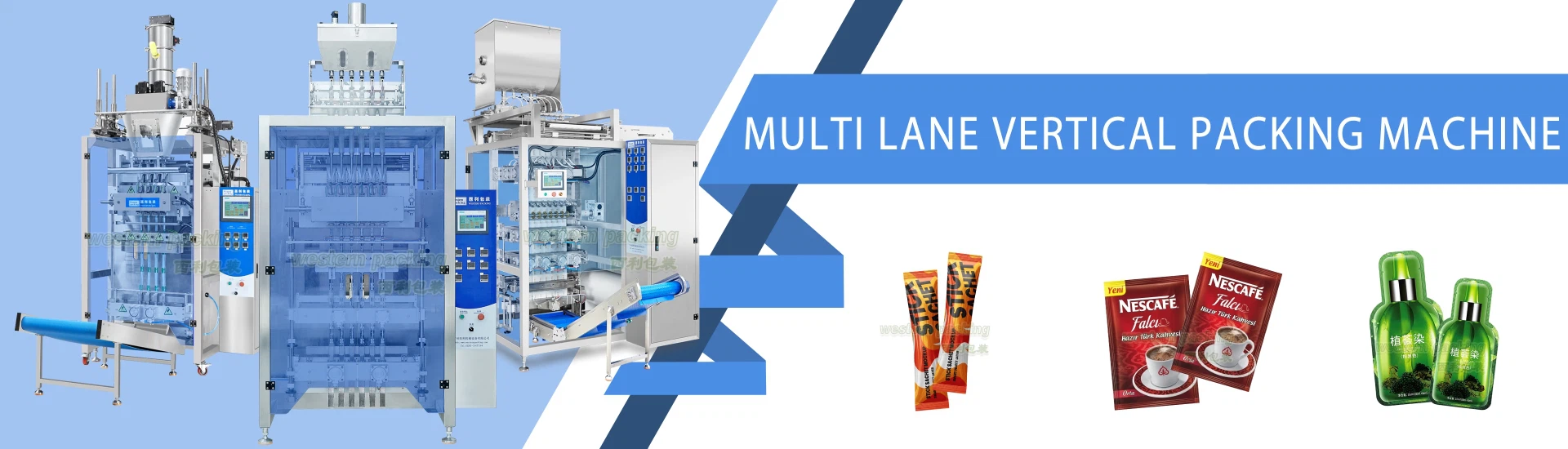
In the powder packaging industry, filling accuracy not only directly affects product quality but also relates to cost control and brand reputation. Achieving a filling accuracy of ±1% is a key goal pursued by many companies during their automation upgrades. So, how can this level of accuracy be consistently achieved in actual production? This requires analysis from multiple perspectives.
Key factors affecting powder filling accuracy
1. Material properties
Powders are not "standardized fluids," and their physical properties have a significant impact on accuracy:
Flowability (e.g., milk powder vs. starch)
Bulk density variation
Hygroscopicity and static electricity
Particle size and uniformity
👉 Materials with poor flowability or a tendency to bridge are more likely to cause metering instability.
2. Equipment Structure and Metering Method
The core metering method of different powder filling machines determines their upper limit of accuracy:
Screw metering (Auger Filler): Suitable for most powders, accuracy can usually reach ±1% or even higher.
Weighing Filler: Higher accuracy, but relatively slower speed.
Volume metering: Greatly affected by density fluctuations, difficult to stabilize at ±1%.
👉 If the goal is to stabilize at ±1%, prioritize high-precision screw metering.
3. Equipment Stability and Control System
High precision relies on a stable mechanical and control system:
Servo motor control is superior to ordinary motors.
PLC + high-precision weighing module enables dynamic correction.
Shock-resistant structure reduces external interference.


Key methods for achieving ±1% accuracy
1. Precise Calibration: Perform weight calibration regularly
👉 Calibration is not a one-time task, but should be part of daily operations.
2. Optimize the feeding process
Powder filling typically involves two stages:
Fast feeding (coarse feeding)
Slow feeding (fine feeding)
By adjusting the switching point, accuracy can be significantly improved:
Switching to slow feeding earlier reduces impulse errors.
Setting the optimal "drop compensation value" based on material characteristics.
3. Controlling Environmental Factors
Many companies overlook the impact of the environment on precision:
Avoid airflow interference (such as direct airflow from air conditioners)
Control humidity to prevent clumping or moisture absorption.
4. Improve Material Consistency
If the material itself fluctuates significantly, even the best equipment will struggle to maintain consistent accuracy:
Maintain batch consistency
Use screening or mixing equipment
Control upstream processes
Routine maintenance recommendations
To maintain metering accuracy over the long term, a standardized maintenance system should be established:
Daily checks for screw and hopper cleanliness
Regular lubrication of moving parts
Check sensor sensitivity
Maintain software parameter backups
Achieving ±1% powder filling accuracy is not determined by a single factor, but rather by a combination of equipment performance, material characteristics, and process management. In pursuing high precision, companies should avoid the approach of simply "replacing equipment" and instead optimize from a systemic perspective.
When equipment selection is appropriate, process parameters are stable, and the maintenance system is comprehensive, ±1% is not only an achievable target but can also become a long-term, stable production standard.


