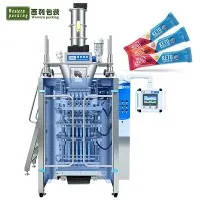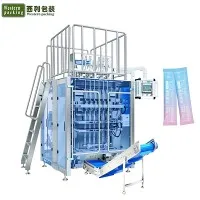

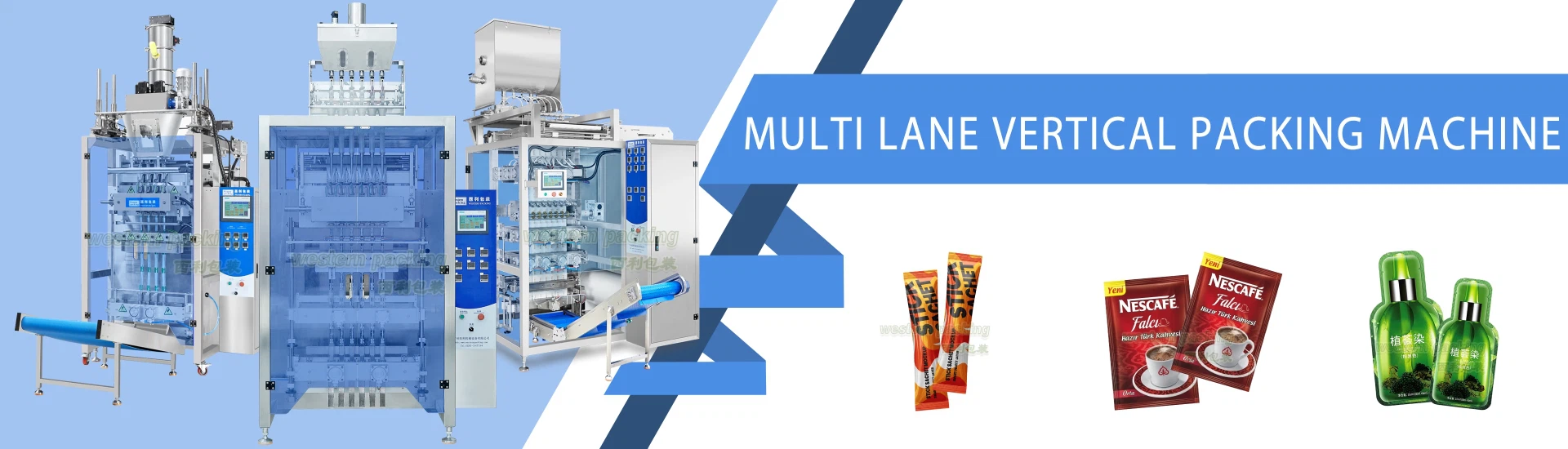
What is an irregular-shaped cutter?
A shaped cutter is a blade customized to the contours of a packaging bag. Unlike a straight cutter, its blade edge is a continuous curve, which can be wavy, arc-shaped, or irregularly shaped.
The blade is typically mounted on a rotating cutter roller or a reciprocating cutter holder and completes the cutting action along a set trajectory during equipment operation. The shape of the bag is essentially "copied" by the blade.
Therefore, the machining precision of the blade directly determines the appearance quality of the finished product.
Working process of irregular cutter
The irregular-shaped cutter doesn't work in isolation; it's integrated into the entire packaging process.
First, the film is fed forward. The packaging film advances at a constant speed, while photoelectric sensors identify color marks and correct the pattern position, ensuring the cutter aligns with the pattern.
Next, the sealing process is completed. The equipment first performs a longitudinal seal, forming a basic bag shape. For edge sealing, the sealing position is closer to the outline, requiring higher precision from the subsequent cutter.
Then comes the cutting stage. Depending on the structure, there are commonly two types: rotary and reciprocating.
Rotary cutters are mounted on rollers and maintain the same linear speed as the film, cutting instantly upon contact. They are fast and efficient but require very strict synchronization.
Reciprocating cutters cut by moving up and down, typically operating during brief pauses in the film's movement. They offer flexible adjustments but are relatively slower.
In many applications, the cutter also performs a heat-sealing function, sealing the edges simultaneously with the cutting.


Key factors affecting cutting performance
The stability of the cutting effect depends on several key control points.
First is synchronization accuracy. The cutting blade position must be consistent with the printed pattern; any deviation will result in off-center cutting or pattern misalignment.
Second is the precision of the cutting tool. The smoothness of the blade curve and the appropriateness of the cutting edge angle both affect the cut quality.
The properties of the film material are also crucial. Differences in thickness and toughness between different composite films directly affect the cutting effect, such as causing stringing or unclean cuts.
Furthermore, temperature control is essential. During hot cutting, too low a temperature will prevent the material from cutting through, while too high a temperature may cause material deformation or sticking to the blade.
Common problems and causes
In actual production, problems typically fall into several categories.
Bursting at the cut edges is often related to tool wear or insufficient temperature. Bag deformation is frequently caused by unstable film tension or uneven feeding.
Pattern misalignment is generally related to cursor tracking or servo synchronization.
Meanwhile, issues like tool sticking and stringing are more common in high-viscosity liquid packaging, mostly related to temperature or tool surface treatment.
Irregularly shaped cutting is not simply a matter of "changing tools" but rather a systematic engineering process involving precision, synchronization, and process matching.
Only when tool design, equipment control, and materials are well-coordinated can aesthetically pleasing and reliably sealed irregularly shaped packaging be consistently produced.