
In the production of powdered products, the packaging stage is often the most underestimated yet most prone to problems. Many companies focus on speed, price, and appearance when purchasing equipment, neglecting a more crucial indicator-stability.
A powder stick pack machine with insufficient stability, even if it can operate normally initially, will lead to frequent downtime, material waste, and increased manual intervention later on, directly impacting production efficiency and cost control. Therefore, judging whether equipment is "stable" cannot rely solely on trial run results but must be based on its actual operating logic.
Measurement stability
The biggest challenge in powder packaging lies in metering, because powders are not as uniform as liquids; they are affected by factors such as humidity, fineness, and flowability.
Many devices appear very accurate during initial testing, but after a period of operation, deviations begin to appear, such as inconsistent metering (sometimes too much, sometimes too little). This indicates insufficient stability of the metering system.
When judging performance, don't just look at the first few dozen packages; observe the equipment's performance after continuous operation for a period of time (e.g., more than 30 minutes). Truly stable equipment maintains controllable error even after long-term operation, rather than relying on frequent manual adjustments.
Can it run continuously without frequent shutdowns?
Equipment with poor stability often suffers from frequent minor issues rather than major malfunctions. These include material jams, blockages, cutter asynchrony, cursor tracking errors, and sealing alarms.
These problems may not seem serious individually, but their frequent occurrence can continuously disrupt production, forcing operators to constantly intervene.
A practical criterion is whether the equipment can operate continuously for an extended period (e.g., one hour) with minimal manual intervention while carrying material. If the equipment requires constant monitoring, its stability is unlikely to meet production requirements.
Is the sealing quality consistent throughout?
Many people focus on measurement during equipment acceptance, but sealing is equally crucial in actual use.
Powder can easily get trapped at the seal. If temperature control or pressure is unstable, it can lead to poor sealing, leaks, or even bag bursts. These problems often don't appear immediately but gradually emerge after a period of operation.
Stable equipment maintains consistent seal flatness and strength during continuous production, without significant differences between batches. This is the result of the combined effect of the temperature control system, mechanical structure, and operating rhythm.
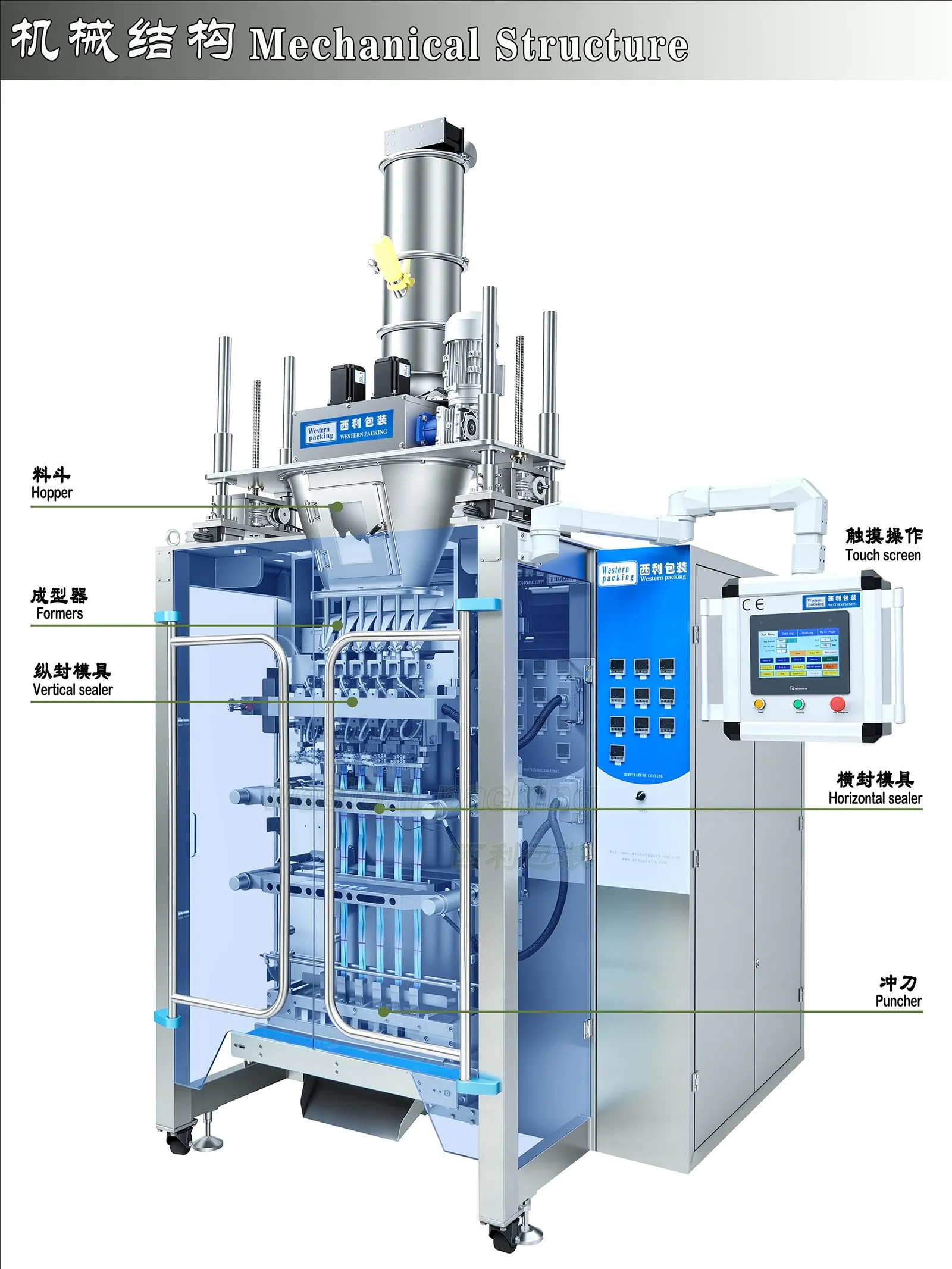
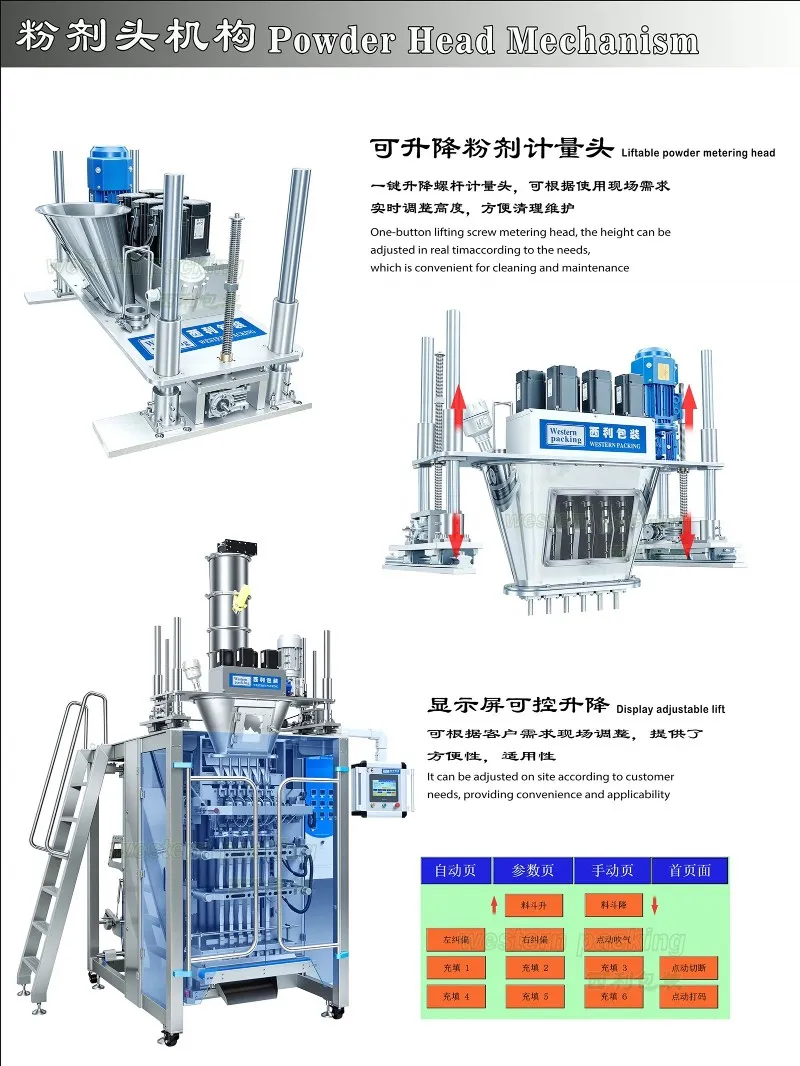
Are the equipment structure and control system reliable?
Stability is not just a matter of "performance" but also a result of "configuration and design."
For example, equipment using servo systems is generally more stable in speed control and motion synchronization; the quality of electrical control systems (such as PLCs and temperature control modules) also directly affects the continuity of operation.
Furthermore, the robustness of the mechanical structure is also crucial. If the equipment experiences significant vibration or shaking during operation, it may not be a major problem in the short term, but in the long run, it will affect accuracy and may even lead to frequent malfunctions.
Simply put, stability is not something that can be tuned out, but rather designed in.
Does it have the ability to adapt to different powders?
Different powders vary greatly. For example, coffee powder is fine and easily disperses, protein powder is fluffy, and flavoring powder has uneven particle size; some are also prone to clumping when exposed to moisture.
If a machine only performs well with a single type of powder and requires frequent adjustments or even becomes unstable when changing products, it will severely limit its practical application in production.
In contrast, good equipment can resume normal production with simple parameter adjustments after changing materials. This adaptability is, in fact, part of its stability.
To determine the stability of a powder stick pack machine, it can be summarized in one sentence:
It's not about whether it can run, but whether it can run continuously and stably for a long time.
A machine that can achieve consistent metering, infrequent shutdowns, stable sealing, and adaptability to different powders is truly suitable for production use.