

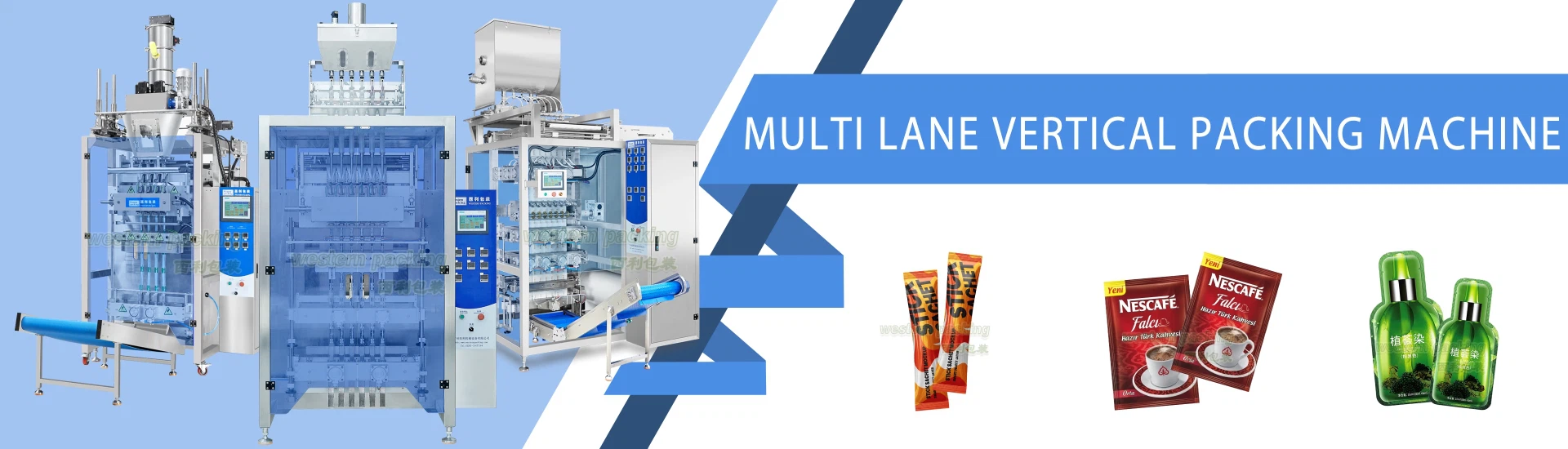
Three-material packaging, where liquid is filled in the center and granules are filled on both sides within a single bag, is widely used in seasoning, instant food, and functional products. This format allows multiple materials to be combined in one sachet while remaining physically separated.
Compared with standard packaging, it requires higher control over dosing accuracy and synchronization, since three independent systems must work together within the same cycle.
Independent Dosing Systems for Each Material
High precision starts with using separate dosing systems for granules and liquid.
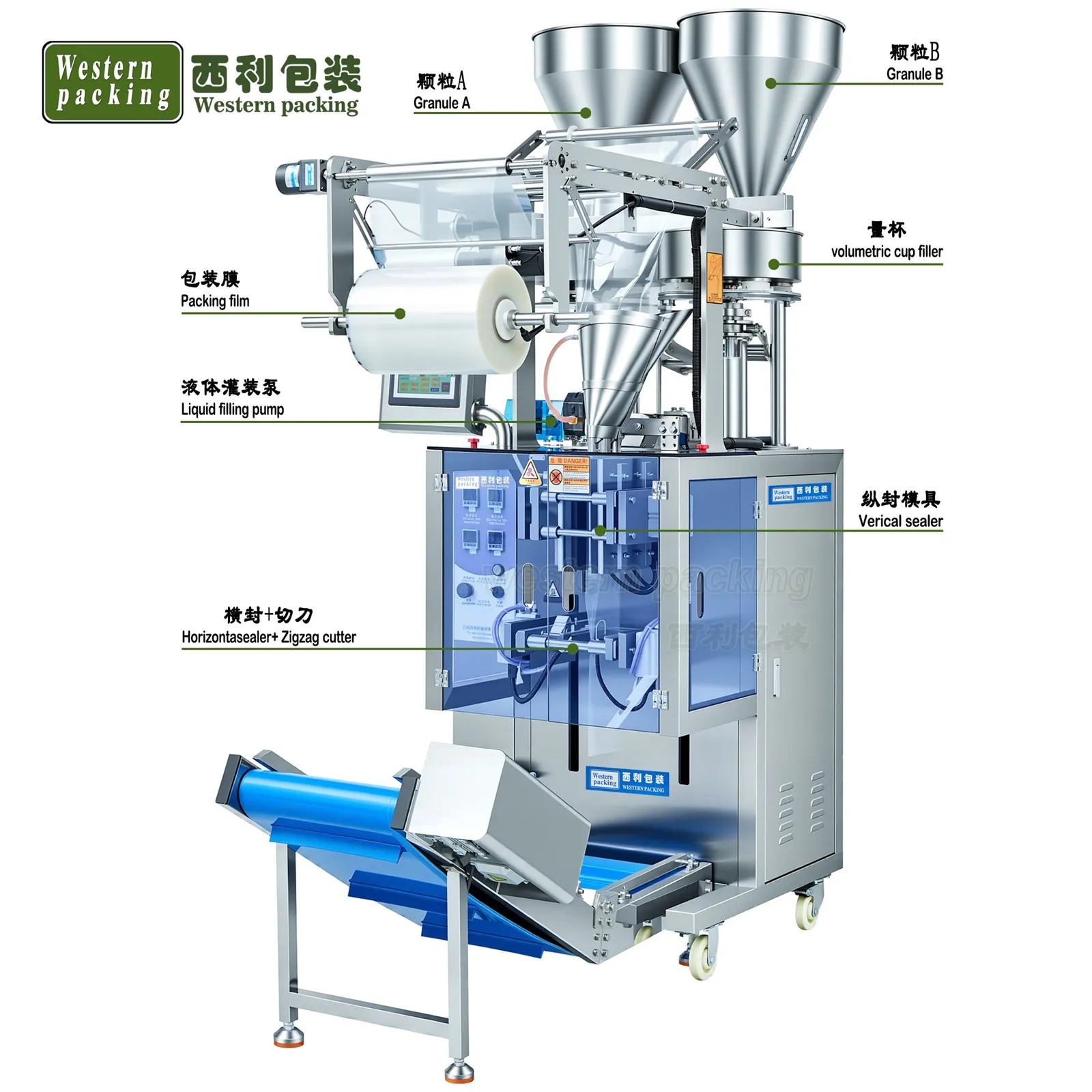
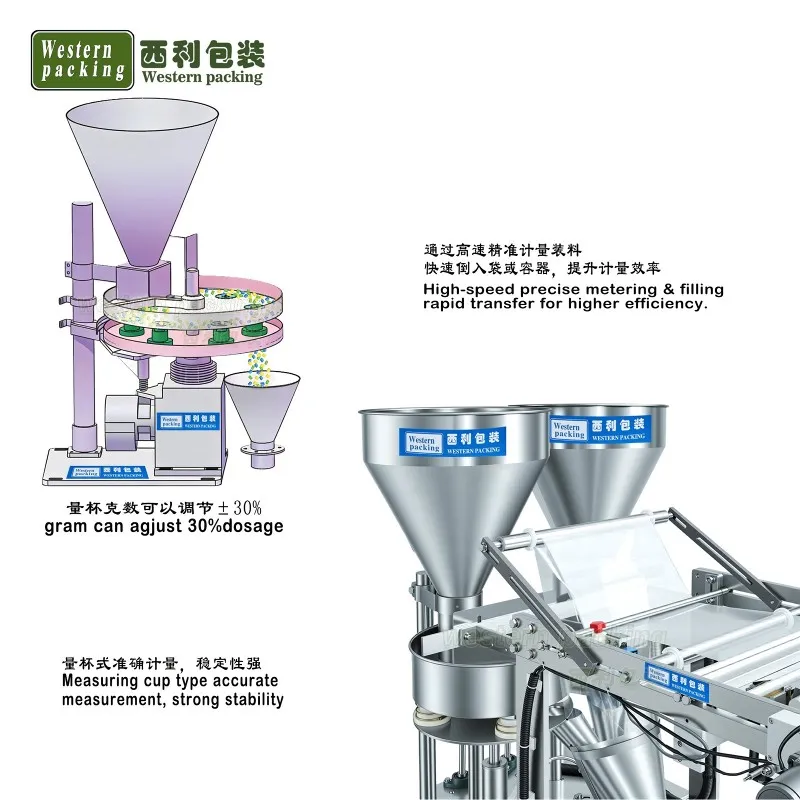
For the left and right granules, volumetric cup fillers are commonly used due to their stable and repeatable performance. It is important to keep both sides mechanically consistent to ensure balanced filling.
For the center liquid, servo-driven piston pumps are widely used, especially for viscous products like sauces or oils. These systems allow precise control of filling volume and maintain stable output during continuous operation.
Synchronous filling
In this structure, accuracy depends not only on each metering unit but also on precise timing control across the three metering channels.
Particles and liquids must be filled at the correct times, synchronized with the bag-making and sealing processes. This is typically achieved through a PLC system and servo motors, ensuring all actions are synchronized within the same cycle.
Stable synchronization helps avoid misalignment, material interference, and inconsistent metering.
Control of Liquid Filling
Liquid is the most sensitive component in the system due to its flow behavior.
To ensure precision, machines are equipped with anti-drip nozzles and shut-off functions, which prevent dripping and ensure clean cut-off after each fill. Maintaining a stable liquid condition, such as consistent temperature, also helps keep dosing accurate.
Achievable Accuracy
With proper configuration and operation, typical dosing accuracy can reach the following:
Granules (left and right): ±1–2%
Center liquid: ±0.5–1%
Maintaining this level of accuracy requires regular calibration and stable production conditions.
Achieving high-precision dosing in center-liquid and side-granule sachet packaging relies on independent dosing systems, accurate synchronization, and a well-designed filling sequence.
With the right combination of technology and process control, manufacturers can ensure consistent product quality and efficient production in multi-component packaging applications.


