
If you’ve ever stood in a sugar processing plant, staring at three different packing lines running at half-capacity because one line does 1kg bags, another does 5kg sacks, and a third is only for those tiny single-serve sticks, you know the pain of inflexible packaging equipment. As a guy who’s spent 12 years selling and troubleshooting sugar packing machines, let me tell you: flexibility isn’t just a buzzword—it’s what separates a machine that slows down your production from one that makes you money. Today, we’re breaking down exactly what flexibility means for a sugar packing machine, how it plays out in real-world formats, and why your line needs to handle more than just one size.
First, let’s get this straight. When people ask about packing format flexibility, they don’t mean “it can squirt a little more sugar into a bag if we’re lazy.” They mean how easily a machine can switch between different package types, sizes, and even materials without shutting down the line for hours, wasting product, or needing a team of engineers to tinker with it. For sugar producers—whether you’re packing for grocery stores, cafes, or bulk distributors—this is non-negotiable. Consumer demands shift faster than sugar in hot coffee: one month, everyone’s buying 1kg resealable bags for home baking; the next, cafes are ordering 5kg packs in bulk to restock their stations; and then bam, airlines need a million single-serve sticks for their in-flight drinks. If your machine can’t keep up, you’re leaving orders on the table.
Let’s start with the most common flexibility win: switching between package formats on the same line. I see this all the time with our Form Fill Seal Packaging Machine, which is the workhorse for most sugar operations. Unlike older machines that are built for one specific format (say, only gusseted bags), modern form fill seal units can handle everything from flat pillow bags to stand-up pouches to gusseted sacks, all in a single run. Wait, you want to do a 2kg stand-up pouch this morning, then switch to 1kg pillow bags this afternoon? No problem—our machines let you swap that out in under 30 minutes. That’s a huge deal because the average downtime for a non-flexible machine is 2+ hours per format change. Multiply that by 20 format changes a month, and you’re wasting 60+ hours of production time just switching parts. For a sugar producer cranking out 100 tons a day, that’s thousands of dollars in lost output.
Now, let’s talk about specific sizes, because format flexibility isn’t just about shape—it’s about how much sugar you’re putting in each package. Here’s where our 5kg Sugar Packing Machine comes in, but that’s just one size it can handle. The beauty of this machine isn’t that it only does 5kg sacks—it’s that it can scale down to 1kg or up to 25kg bulk bags with the same quick changeover. I had a customer in Texas last year who was packing 5kg bags for a local grocery chain, then got a last-minute order for 12kg bulk sacks for a farm supply store. They thought they’d have to bring in a whole new line, but we swapped the filling heads and adjusted the machine’s settings in 25 minutes, and they were back up running. The key here is modular parts: instead of the machine being built with permanent, fixed components, every part that touches the sugar (or forms the package) is designed to be swapped out without tools, or with just a simple screwdriver. No more ordering custom parts that take 6 weeks to arrive when you get a random order for a different size.
But flexibility also isn’t just for bulk or home-sized bags. If you’re in the business of single-serve sugar sticks—those little packets you get at coffee shops or diners—then you need a machine that can roll with that too. Our Packing Machine Sugar Stick line is built specifically for that, but again, it’s more flexible than you might think. Sure, it does the standard 5g or 7g stick, but you can adjust it to make 3g sticks (those tiny ones for espresso shots) or even 10g sticks for larger drinks. And the best part? If you suddenly get an order for sugar sticks in different materials—like a compostable wrapper instead of plastic—you just swap out the feeding mechanism for the wrapper, no whole new machine needed. I worked with a coffee chain in Seattle that switched to compostable packaging last year, and they were able to re-tool their existing stick-packing line in a week, instead of having to buy a whole new machine. That’s the kind of flexibility that saves you from wasting thousands on new equipment just to meet a sustainability trend.
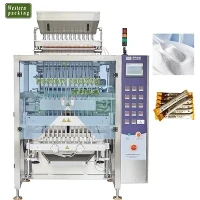
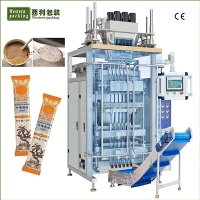
Wait, let’s get into the heavy-hitter of flexible packaging: multi-lane lines. If you’re packing small single-serve portions, like those sugar sticks, efficiency is everything. That’s where our Multi Lane Stick Packing Machine comes in. This isn’t just a machine that makes one stick at a time—it makes 6, 8, even 12 sticks at the same time, all from a single roll of wrapper. But here’s the flexible part: you can adjust how many lanes you’re running, and even change the length of each stick, without stopping the whole line. Need to run 8 lanes of 5g sticks for a bulk order, then switch to 4 lanes of 10g sticks for a new client? You can do that mid-run, no full shutdown. For high-volume producers, this is a game-changer because it lets you fulfill multiple small orders in one production run, instead of having to do separate runs for each order. That cuts down on both downtime and wrapper waste, which is a win for your bottom line and your sustainability goals.
But hold on—flexibility isn’t just about the machine’s ability to swap parts. It’s also about how well it works with different types of sugar, right? Wait, did I forget that sugar isn’t just sugar? There’s granulated sugar, powdered sugar, brown sugar, even specialty sugars like raw cane sugar or coconut sugar. Some of these are finer, some are more clumpy, some have different flow properties. A machine that works great for granulated sugar might jam if you try to run powdered sugar. The good news is that modern flexible sugar packing machines are built with adjustable filling mechanisms that can handle different sugar types. For example, if you’re packing powdered sugar, you can switch from a gravity-fed filling system to a auger-filling system that’s gentler and avoids clumping. If you’re running raw cane sugar, which has larger crystals, you can adjust the gap in the filling head to make sure it doesn’t get stuck. That’s another layer of flexibility that a lot of people don’t talk about—but it’s the difference between a machine that can handle all your products and one that’s limited to just one type of sugar.
Let me give you a real example to make this concrete. A client of mine in Mexico City makes all kinds of sugar products: they have home-sized bags for groceries, bulk sacks for bakeries, and single-serve sticks for convenience stores. Two years ago, they had three separate lines: one for bulk sacks, one for home bags, one for sticks. That meant three operators, three maintenance teams, and a ton of downtime switching between products. They bought our Sugar Packaging Machine—the full line, not just one part—and now they run everything on one line. In the morning, they do 25kg bulk sacks for a bakery. Mid-day, they switch to 1kg stand-up pouches for a grocery chain. By the afternoon, they’re running 5g sugar sticks for a convenience store order. All of that in one day, with only 45 minutes of total downtime for format changes. Before, they’d need three separate days to do all that. Now, their output is up 40%, their labor costs are down 25%, and they can take on last-minute orders that they would have had to turn down before. That’s the power of real flexibility, not just marketing fluff.
Now, let’s talk about the stuff that makes this flexibility actually work, because you can’t just build a flexible machine without planning for it. First, modular design: every part that would need to be swapped for a new format is a separate, standardized component, not a custom part. That means you can order a new filling head or wrapper feed in a day, not weeks. Second, intuitive controls. Old machines required a technician to input complex code to switch formats. New flexible machines have touchscreen interfaces that let you select the format you want—say “5kg bulk” or “7g stick”—and the machine automatically adjusts the filling speed, bag size, seal temperature, and everything else. No need to memorize 100 different settings; just tap a button. Third, robust build quality. Flexible machines get swapped around all the time, so they need to be built to handle that. Cheap parts will wear out quickly, making the format changes less reliable. All our machines are built with heavy-duty stainless steel (which also works great for food safety, by the way) so they stand up to years of format swaps without breaking.
I know what some of you are thinking: “A flexible machine must be way more expensive than a single-format one.” Yeah, upfront cost is a bit higher, but let’s do the math. If a single-format machine costs $50,000 and a flexible one costs $75,000, that’s a $25,000 difference. But if you’re wasting $30,000 a year in downtime and lost orders because your machine can’t handle different formats, that $25k difference pays for itself in the first 12 months. And then it keeps saving you money year after year. On top of that, flexible machines future-proof your business. A year from now, if the market starts demanding compostable packaging or single-serve sticks in different sizes, you don’t have to buy a whole new line. You just adjust your existing flexible machine, and you’re ready to go. That’s priceless in a market that’s always changing.
Wait, let’s address a common myth: some people think flexible machines are slower than single-format ones. That was true 10 or 15 years ago, but not anymore. Modern flexible sugar packing machines run just as fast as dedicated lines, because they’re built with high-speed motors and precise controls that adjust automatically when you change formats. The only time you lose time is during the format change, not during actual production. So you get the best of both worlds: high speed and the ability to switch between formats quickly. That’s why so many sugar producers are ditching their old single-format lines and going flexible.
If you’re reading this and nodding along thinking, “Our current machine is a bottleneck because we can’t keep up with all our different packaging needs,” then it’s time to look at upgrading to a flexible sugar packing system. Whether you need bulk sacks, home-sized bags, or single-serve sticks, there’s a solution that fits your production needs without the headaches. If you want to chat through what your specific formats are, how much you’re producing, and what kind of flexibility you need, our team is here to help. We don’t do one-size-fits-all solutions; we build machines that work for your business, and that can grow with you as your needs change.


Don’t let inflexible packaging equipment limit what you can sell or how much you can make. The right sugar packing machine should adapt to your orders, not the other way around. Reach out to us to learn more about how our range of packaging solutions—including the Form Fill Seal Packaging Machine, 5kg Sugar Packing Machine, Packing Machine Sugar Stick, Multi Lane Stick Packing Machine, and full Sugar Packaging Machine line—can bring the flexibility you need to your production.
References
- Food and Agriculture Organization of the United Nations. (2022). Packaging Flexibility for Small and Medium-Sized Food Producers. FAO Agricultural and Food Engineering Technical Paper.
- Packaging Association for Food and Beverage Industry. (2023). Trends in Flexible Packaging Equipment for Sugar and Granular Products. PAFFI Annual Equipment Report.
- Smith, J. (2021). Downtime Costs in Food Processing: A Case Study of Sugar Packaging Operations. International Journal of Food Engineering.
- European Food Safety Authority. (2022). Food Contact Materials for Compostable Packaging Systems. EFSA Journal.