

How to Optimize the Layout of a Shampoo Packaging Machine in a Production Workshop
As a seasoned supplier of shampoo packaging machines, I understand the critical role that an optimized layout plays in the efficiency and productivity of a production workshop. A well - designed layout can streamline the production process, reduce costs, and enhance the overall quality of the packaging. In this blog, I will share some key strategies and considerations for optimizing the layout of a shampoo packaging machine in a production workshop.
1. Understanding the Production Process
Before diving into the layout design, it is essential to have a comprehensive understanding of the shampoo packaging production process. This includes all the steps from raw material handling to the final packaged product. The typical process involves filling the shampoo into containers, sealing, labeling, and then packing the finished products into boxes for shipment.
For example, if you are using a Shampoo Filling Packing Machine, you need to know how it operates, the speed at which it can fill the shampoo, and the space it requires for proper functioning. Different types of machines may have different requirements, and the layout should be designed to accommodate these specific needs.
2. Space Utilization
Efficient space utilization is one of the primary goals of optimizing the layout of a shampoo packaging machine. The production workshop may have limited space, and every square foot counts.
- Machine Placement: Place the shampoo packaging machines in a way that minimizes the distance that the products need to travel between different processing steps. For instance, if you have a Pouch Filling And Packing Machine and a labeling machine, position them close to each other so that the pouches can be easily transferred from the filling machine to the labeling machine.
- Storage Areas: Allocate sufficient space for raw materials, such as shampoo bottles, caps, and labels, as well as for finished products. These storage areas should be located in a convenient position near the relevant machines. For example, the area for storing empty bottles should be close to the filling machine, and the storage for finished packaged products should be near the exit of the production line for easy loading onto trucks.
- Aisles: Ensure that there are wide enough aisles for workers to move around safely and for equipment, such as forklifts, to operate. Narrow aisles can cause congestion and increase the risk of accidents, which can disrupt the production process.
3. Workflow Optimization
The layout should be designed to create a smooth and continuous workflow. This can be achieved by arranging the machines in a logical sequence according to the production process.
- One - Way Flow: Establish a one - way flow of materials and products through the workshop. This helps to prevent bottlenecks and confusion. For example, the shampoo should flow from the storage area to the filling machine, then to the sealing and labeling machines, and finally to the packing area in a single - direction flow.
- Buffer Zones: Incorporate buffer zones between different machines. These buffer zones can act as temporary storage areas for products in case there is a delay in one part of the production process. For example, if the labeling machine breaks down temporarily, the filled bottles can be stored in the buffer zone between the filling machine and the labeling machine without stopping the operation of the filling machine.
4. Safety Considerations
Safety is of utmost importance in a production workshop. The layout should be designed to minimize the risk of accidents and ensure the well - being of workers.

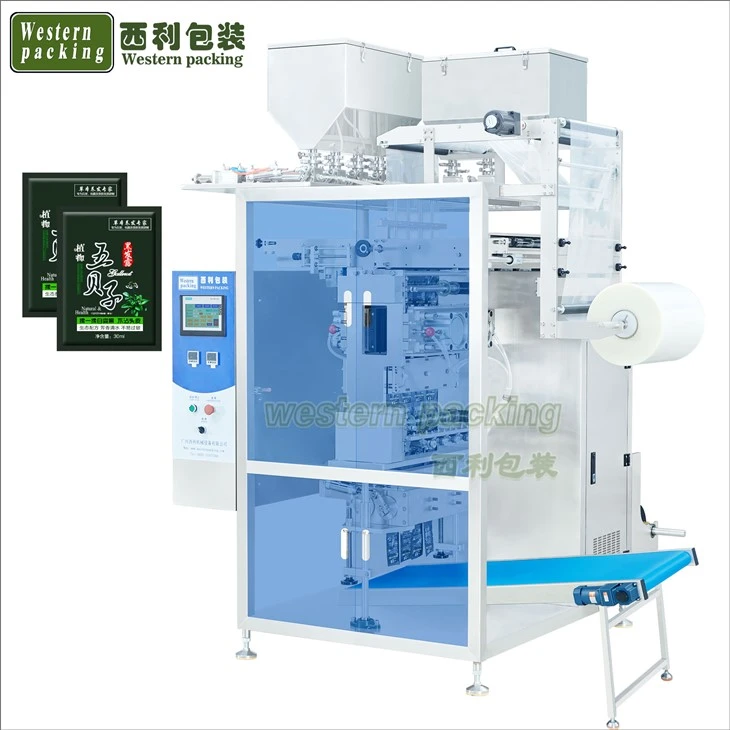
- Machine Guarding: Ensure that all shampoo packaging machines, such as the Fully Automatic Shampoo Sachet Packing Machine, are properly guarded to prevent workers from coming into contact with moving parts. Guards should be in place around conveyors, filling nozzles, and other potentially dangerous areas.
- Emergency Exits: Clearly mark and keep emergency exits unblocked at all times. The layout should allow for easy and quick access to these exits in case of an emergency.
- Ventilation and Lighting: Provide adequate ventilation to remove fumes and odors from the production area. Good lighting is also essential to ensure that workers can see clearly and perform their tasks safely.
5. Flexibility and Scalability
The production needs of a shampoo manufacturing company may change over time. Therefore, the layout of the shampoo packaging machine in the workshop should be flexible and scalable to accommodate future growth and changes.
- Modular Design: Consider using a modular design for the layout. This means that the machines and equipment can be easily re - arranged or added to as needed. For example, if the company decides to introduce a new type of shampoo packaging, such as small sachets, a Small Pouch Packing Machine can be easily integrated into the existing layout.
- Future Expansion Space: Reserve some space in the workshop for future expansion. This can be used to add new machines or to increase the storage capacity as the production volume grows.
6. Integration with Other Equipment
The shampoo packaging machine should be well - integrated with other equipment in the production workshop, such as conveyors, storage systems, and quality control devices.
- Conveyor Systems: Choose conveyor systems that are compatible with the shampoo packaging machines. The conveyors should be able to transport the products smoothly between different machines at the appropriate speed. For example, if the Plastic Packaging Machine has a high - speed output, the conveyor system should be able to handle the same speed to avoid bottlenecks.
- Quality Control: Incorporate quality control devices, such as weighing scales and vision inspection systems, into the layout. These devices can be placed at strategic points in the production line to ensure that the packaged products meet the quality standards.
In conclusion, optimizing the layout of a shampoo packaging machine in a production workshop requires careful planning and consideration of various factors. By understanding the production process, utilizing space efficiently, optimizing the workflow, ensuring safety, providing flexibility, and integrating with other equipment, you can create a layout that is not only efficient but also conducive to high - quality production.
If you are looking to optimize your shampoo packaging machine layout or are in the market for a new packaging machine, I invite you to reach out for a detailed discussion. Our team of experts can provide you with customized solutions based on your specific production needs.
References
- Smith, J. D. (2018). Principles of Production Layout Design. Manufacturing Press.
- Johnson, R. M. (2019). Safety in Industrial Packaging Production. Safety Journal Publications.
- Brown, A. S. (2020). Flexible Manufacturing Systems and Layout Optimization. Production Engineering Books.


