

|
|
|

Industry Overview
Sachet-cartoning production lines refer to fully automated production lines that package small-sized products (such as powders, granules, and liquids) from single bags to finished cartons. They are widely used in the food, pharmaceutical, daily chemical, and chemical industries, improving production efficiency, reducing labor costs, and ensuring attractive packaging and convenient logistics.
Complete line composition and process
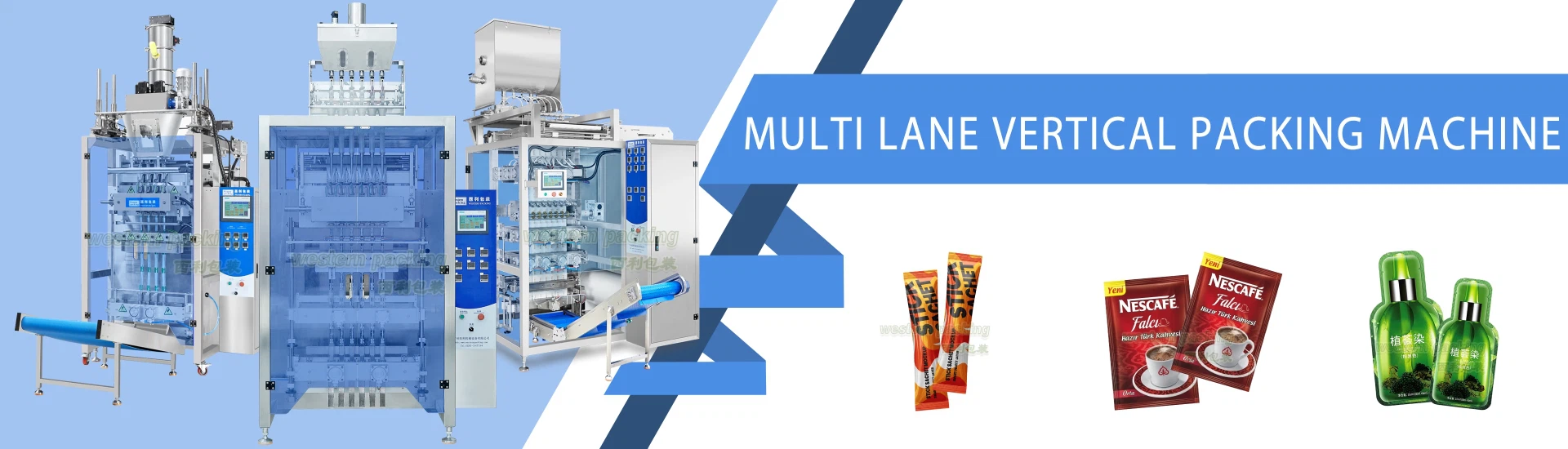
The sachet cartoning machine production line mainly consists of two parts: a sachet packaging machine and a cartoning machine. The sachet packaging machine is responsible for product weighing, filling, sealing, and coding to form single-bag products; the cartoning machine is responsible for automatically opening cartons, filling bags, sealing cartons, coding, and checking weight to complete the packaging of whole cartons of products.
The basic process of the production line is: Raw materials → Sachet packaging → Sachet lining → Carton opening → Bag filling → Carton sealing and coding → Finished product output.

Advantages
High automation: Reduces manual operation and improves production efficiency.
Aesthetically pleasing and stable packaging: Neat and uniform cardboard boxes with reliable sealing.
Flexibility: Adaptable to various sizes of small bags and cardboard boxes, with easy changeover options.
Intelligent features: PLC control and touchscreen operation enable alarms, production statistics, and remote monitoring.
Application areas
This production line is widely used for packaging various products such as seasoning packets, instant beverages, tea, candy, granular medicines, and sample cosmetics, and is especially suitable for large-scale standardized production.
Industry development trends
In the future, the Sachet Cartoning Machine production line will evolve towards greater intelligence and flexibility. The equipment will be able to automatically monitor production status, quickly switch between different sizes of pouches and cartons, and reduce manual intervention. Robotic arms and collaborative robots will be used more extensively to improve bagging and boxing efficiency, making the entire production line more efficient and stable. Simultaneously, the use of green packaging materials and energy-saving designs will reduce energy consumption and operating costs.
Related product recommendations


