

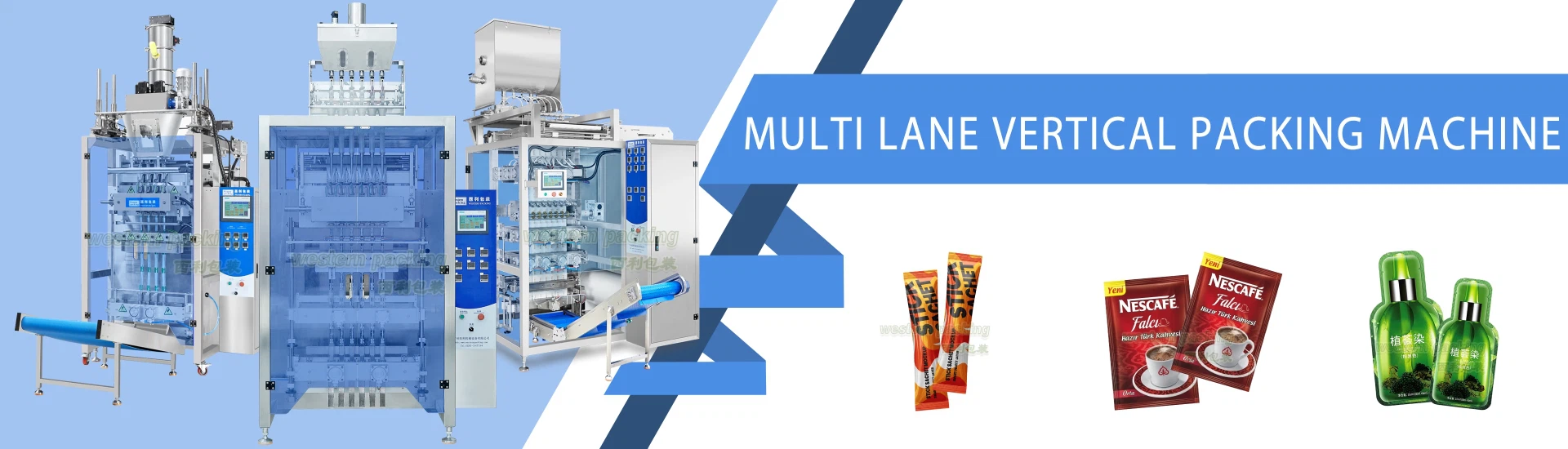
Liquid pouch packaging machines are widely used in the food, daily chemical, pharmaceutical, and chemical industries for the automated small-package production of products such as sauces, honey, shampoo, disinfectants, and lubricating oils. Due to the high fluidity, large viscosity variations, and tendency to foam, liquid materials are prone to various problems during operation.
Based on practical production experience, the following provides a systematic analysis of common malfunctions and corresponding solutions.
The seal is not secure or leakage occurs
The quality of the sealing directly determines whether a product is qualified and is one of the most critical quality control points in liquid packaging. Poor sealing usually manifests as liquid seepage at the edges, slight cracking, or bag breakage during transportation.
1. Insufficient or Uneven Sealing Pressure
Unstable cylinder pressure or worn guide rails can lead to uneven sealing force, resulting in areas that are not fully sealed.
Solution: Check if the air source pressure is stable within the standard range. Clean or replace worn mechanical guide structures to ensure even force distribution on the sealing mold.
2. Inappropriate Packaging Material Matching
Composite films with different structures (such as PE/AL/PE and PET/PE) exhibit significant differences in their response to temperature and pressure. If the material selection is inappropriate, sealing problems may occur even if the parameters are correct.
Solution: It is recommended to select the appropriate heat-sealing layer material based on the product properties and conduct small-batch trial sealing tests before formal production.


Inaccurate measurement (unstable filling volume)
Liquid packaging requires high consistency in weight and volume; metering deviations directly impact customer experience and cost control.
1. Metering Pump Wear or Poor Sealing
Over time, the internal seals of the metering pump gradually age, leading to unstable backflow or suction, resulting in fluctuations in the filling volume per bag.
Solution: Regularly inspect the pump body seals and replace them according to the usage cycle. Also, check the pump chamber for residual crystals or blockages during maintenance.
2. Air Bubbles in the Liquid
If air bubbles are generated during high-speed filling, it can cause instantaneous volume errors, resulting in unstable package weight.
Solutions: This can be improved by adding a degassing device or reducing the feeding speed. Additionally, optimizing the suction pipe structure can reduce air contamination.
3. Parameters Not Adjusted for Material Variation
Liquids of different viscosities (such as aqueous and paste-like products) have different flow characteristics. Using the same set of parameters will result in significant deviations.
Solution: The filling time, suction speed, and backflow parameters should be readjusted according to the product viscosity, and a product parameter database should be established.
Frequent equipment shutdowns or unstable operation
Unstable equipment operation is usually a systemic problem involving multiple aspects of the electrical, pneumatic, and control systems.
1. Sensor False Trigger
Dust, liquid splashes, or photoelectric contamination can cause sensors to misinterpret data, leading to shutdowns.
Solution: Clean photoelectric switches regularly and add protective covers to areas prone to contamination.
2. Fluctuations in Air Supply Pressure
Insufficient or fluctuating air pressure can affect the cylinder's operating rhythm, leading to abnormal operation.
Solution: It is recommended to use an independent air compression system and install a pressure-stabilizing filter.
Systematic maintenance recommendations to reduce failure rate
Equipment stability depends not only on maintenance but also on long-term standardized management.
1. Establish a regular maintenance system: This includes basic maintenance tasks such as lubrication, cleaning, and fastener inspection.
2. Standardize operating procedures: Unify start-up, adjustment, and shutdown procedures to reduce human error.
3. Use qualified packaging materials and supplies: Avoid equipment misjudgment or sealing failure due to material issues.
4. Data-driven equipment management: Record operating parameters and fault conditions to create a traceable analysis system.
The stable operation of liquid pouch packaging machines is the result of the combined effects of mechanical structure, process parameters, and daily management. Most problems are not sudden but rather the accumulation of small deviations over a long period.
By establishing a standardized maintenance system and optimizing parameters based on the characteristics of different materials, equipment stability and production efficiency can be significantly improved, while overall operating costs can be reduced.


